Comment choisir un coussin de méditation ou zafu ?

How to choose a meditation cushion or zafu?

Your meditation cushion should be adapted to your body shape and your tastes.

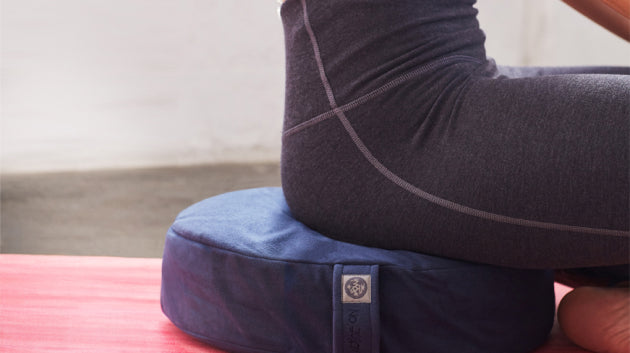
For some, a zafu is just a cushion, but in reality it is your greatest ally in the practice of meditation, because it is on this one that you will sit comfortably. There are various shapes, sizes, colors and filling materials. There is something for all tastes and all body types! Indeed, an unsuitable meditation accessory will be uncomfortable and you will have difficulty relaxing. Choosing a meditation cushion is first of all, opting for the ideal size according to your anatomy.

Choosing a zafu according to its height

When meditating, posture should not be left to chance. Your back is straight, your pelvis is slightly tilted forward and your knees are on the ground. To do this, it is important to choose the right height for your meditation cushion to suit the flexibility of your pelvis. Otherwise? You'll have lower back pain!

  • Are you flexible in the pelvis? Prefer to buy a zafu with a height of 5 to 11 cm. However, if you are tall, you should choose a meditation cushion with a thickness of at least 10 cm,
  • Are you moderately flexible in the pelvis? Prefer a cushion 12 to 16 cm high,
  • You are not flexible in the pelvis or a beginner in the art of meditation? It is necessary to buy a zafu greater than 16 cm thick or even 20 cm high if you are tall.

The filling: A firm or soft meditation cushion?

The filling of the zafu is equally important. It can be firm, soft or intermediate depending on the material it contains. You should buy a meditation cushion according to your preferences in terms of firmness, but also your flexibility.

Choosing a Zafu Based on Your Firmness Preferences

  • Soft: opt for a kapok meditation cushion ,
  • Firm: prefer a buckwheat zafu ,
  • Intermediate: Choose a spelt meditation cushion .

Your meditation cushion according to your flexibility

  • Are you flexible in the pelvis? Opt for a kapok zafu ,
  • You are not flexible in the pelvis? Choose a zafu made from spelt or buckwheat.

Buy a zafu of the right width for your comfort

You will sit directly on your meditation cushion . So, the width of this meditation accessory must be adapted to your body shape. If you are thin, prefer a less wide zafu and vice versa if you need more space.

Is the color of the zafu important?

Do you think that the color of the meditation cushion does not matter? Think again! Colors have a vibration (an energy) that acts on your body. Thus, they are of great help. Plain or printed, there is a choice in terms of colors for your yoga accessory .

  • Violet: it symbolizes peace, purity and idealism. It is attached to the 7th chakra (crown),
  • Blue: it promotes inner serenity and listening to others. It is connected to the 5th chakra (throat),
  • Green: reminiscent of nature, it symbolizes optimism, stability, calm and harmony. It is linked to the 4th chakra (heart),
  • Orange: it is an invigorating color, referring to communication and creativity. It is linked to the 2nd chakra (sacral),
  • Red: This is a color that brings inner strength. It is connected to the 1st chakra (root),
  • Black: it helps to create a vacuum.

Choosing a meditation cushion based on its shape

You may have noticed that there are various shapes of meditation cushions ? The best known, the zafu itself, is round. Its advantages are its greater width and the variability of the seats. Ideal for beginners! The half-moon meditation cushion adjusts to the shape of the body. Finally, the square meditation cushion is more practical to transport.

Discover the meditation cushions available on the Tayronalife store.

February 07, 2019
Comment choisir un bolster de yoga ?

How to choose a yoga bolster?

Your yoga bolster is your accomplice in the perfect execution of your asanas.

The bolster is a cylindrical or rectangular cushion that is generally used in gentle Iyengar or restorative yoga. Regardless of its shape, this object can be used by both beginner and experienced yogis. Serving as a support, it is an additional aid for performing certain asanas! This way, you maintain good alignment, but also work longer and deeper, without injuring yourself. For this, it is necessary to choose a yoga bolster carefully in order to perform opening, relaxation or stretching asanas safely.

A cylindrical or rectangular yoga bolster?

In stores, you can find the cylindrical or rectangular yoga bolster . The cylindrical cushion is also called a yoga bolster because of its shape. It is best known by yogis to easily perform opening, stretching or restorative postures. For example, you can place it under your legs during the Savasana position or along your spine. The advantage is that it fits the shape of your body very well.

The rectangular yoga bolster is less well-known, but oh so useful! Indeed, it can be used on both sides (laid flat or on the side) depending on your flexibility or the type of posture. It can even be used as a meditation cushion at the end of a yoga session. A practical yoga object , because it's 2 in 1!

What size yoga bolster should I choose?

There are 2 sizes of yoga bolster : the mini and the standard. The smallest fits under your neck without bothering you. Why use it? Simply because at the neck level, you accumulate tension and using the small yoga bolster helps relax this area. As for the standard yoga bolster (63 x 23 cm or 69 x 23 cm), it slides along your spine as support. Finally, the rectangular bolster comes in 2 sizes: 66 cm long x 17 cm wide x 7 cm high or 63 cm long x 33 cm wide x 14 cm high. Generally speaking, the size of your yoga bolster is chosen according to your size, your flexibility and the posture performed.

Choosing the right filling material for the firmness of the yoga accessory

The filling of the yoga bolster affects the firmness of the cushion. If you are light, I recommend a softer yoga accessory . Conversely, if you are heavier, prefer a firmer eco-responsible bolster . A little tip, favor the purchase of a zipped bolster . Why? In order to be able to add material inside and adjust the firmness.

  • Do you prefer softness or are you light? Opt for a kapok bolster ,
  • Do you prefer firmness or are you heavier? Choose a spelt bolster .

A color, a symbolism

A rainbow of colors and prints make up the yoga bolsters on the market. In chromatherapy, color has a vibration (an energy) that interacts with your body. Thus, each color has its benefits.

  • Black: it helps to empty your mind,
  • Red: connected to the root chakra, it transmits inner strength,
  • Green: linked to the heart chakra, it evokes harmony, optimism, stability and calm,
  • Blue: connected to the throat chakra, it encourages listening to others and inner serenity,
  • Violet: linked to the crown chakra, it expresses idealism, peace and purity.

February 05, 2019
Tags: Accessoires
Portrait d'une yogini créatrice de LagOm: Anna Ilkovics

Portrait of a yogini creator of LagOm: Anna Ilkovics

Anna Ilkovics, Swedish and living in Belgium, has a career as a client director. For over 20 years, her job has been to meet the needs of others, a model she also tends to apply within her family.

It was the discovery of yoga and meditation that taught him that taking care of others involves, first and foremost, taking care of oneself.

Anna then followed several mindfulness training courses and practiced yoga and meditation on a daily basis and participated in numerous retreats.

After a few years, she now decides to share her world and launches LagOm Balance which organizes yoga retreats. Anna partners with the best yoga and meditation teachers, finds magical places, chooses vegetarian chefs with care and always brings an extra touch like a shiatsu workshop, a sound bath or a naturopathy workshop. Everything is brought together to reconnect with yourself for a weekend or a week.

It was only natural that I asked him a few personal questions about his yoga practice, which I am sharing with you today.

HOW DID YOU GET TO TAKE CARE OF YOURSELF?

I discovered yoga and meditation 3 years ago during a retreat in Tulum, Mexico. I arrived there a bit by chance and immediately felt calm, centered and composed. It became obvious and a real necessity. Suddenly, a whole new universe opened up to me.

I haven't stopped since, to the point of going to Bali alone last year for two months of yoga and meditation.

Currently I am starting my own business LagOM Balance as a yoga retreat organizer. LagOm is a Swedish word that means neither too much nor too little, just right. It is the right balance. I believe that everyone can find their own balance without necessarily having to change their lifestyle. You don't have to give up everything and live like a hermit to feel better. For example, a few days of calm, from time to time, are enough to take care of yourself and can be enough to compensate for a stressful daily life. I really believe that balance is the basis of well-being and that yoga and meditation are tools to achieve it. By the way, in LagOM there is the universal sound OM, is it really a coincidence?

WHAT PRACTICE FOR YOUR WELL-BEING?

It depends on my mood and my physical state. Sometimes more flow, or hatha and at other times yin or restorative. I also like wall yoga or even sometimes hot yoga. That's what I love about yoga, you always find what you need through the different practices.

WHAT IS THE RITUAL OF YOUR PRACTICE?

I like to arrive early in the room. Sit on my mat, in lotus position, close my eyes and forget the outside world. I love the expression "arrive in the moment". I really feel like I'm arriving, catching up. This moment of silence, just before the class begins, is essential to me.

WHAT DO YOU GET FROM IT?

A calm, a well-being and I find myself centered afterwards. The emotions are soothed and strangely if I have questions, a dilemma or a decision to make, the answers come to me quite naturally at the end of the practice without even having thought about it during the session. It always impresses me as much.

WHAT DO YOU CARRY IN YOUR YOGA BAG?

My yoga mat, very thin that I take everywhere and that I place on the studio mat, a small towel, my water bottle and an elastic for my hair.

WHAT IS YOUR FETISH OBJECT/ACCESSORY?

I don't really have a fetish object. On the other hand, I have a tattoo, it's a 50th birthday present from my best friends. It's a lotus flower above two lines of waves that represents the sea. It is inside my foot and I see it in every posture. It is very symbolic for me.

WHAT WOULD BE YOUR ADVICE FOR TAYRONA YOGINIS?

To listen to yourself. I've only been doing yoga for 3 years, I don't have much strength, there are postures I still don't know how to do, like Bakasana and handstands. But it doesn't matter. I get all the physical and mental benefits without forcing myself or trying to be perfect. I progress at my own pace and I feel good.

WHERE / HOW DO YOU PRACTICE?

I am registered at a studio in Brussels that offers a wide variety of classes, every day and with great teachers. I always find a session that suits my schedule and my needs. Otherwise, when I travel, I take the opportunity to try new studios and meet new teachers. In Bali, in 6 weeks, I had the chance to test more than fifteen different studios. This trip taught me a lot.

WHAT IS YOUR MANTRA/FAVORITE PHRASE?

I have two:

“You can't give from an empty well”.
It helped me with the guilt you feel when you take time for yourself instead of taking care of others.
“Don’t believe everything you think”.
This is the most beautiful lesson in mindfulness.

Facebook: www.facebook.com/groups/lagombalance/

Instagram: www.instagram.com/lagombalance/

Website: www.lagombalance.com

February 02, 2019
Comment choisir une brique de yoga ?

How to choose a yoga brick?

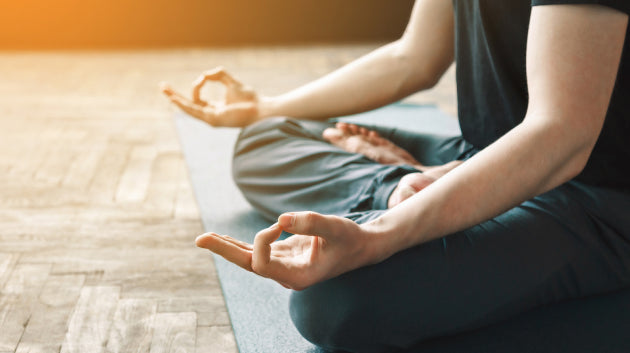
The yoga brick is interesting in order to extend your arm and your foot or as support for certain postures in order to avoid injury. To choose a yoga brick, in particular its grip, its density, its solidity, its size, its material and the shape of its edges, follow our advice in this article.
January 31, 2019
Tags: Accessoires
Qu'est ce qu'un asana

What is an asana in yoga practice?

Asana , 3rd pillar of yoga.

Asana yoga or yoga posture for beginner yogis, is generally known for its sequence of various more or less difficult body positions performed on a suitable yoga mat. Originally Asana is a Sanskrit term translating to ''the act of sitting'' or ''the way of sitting''. Today, it refers to the yoga pose held in a still, comfortable and relaxed manner in order to bring about relaxation. Named after flora and fauna, the most famous positions are the tree pose ( Vrikshasana ) and the lotus pose ( Padmasana ).

Yoga postures according to ancient texts

The word asana first appears in the Yoga Sutras of Patanjali, written between 200 BC and 500 AD. In fact, yoga positions are part of one of the 8 limbs of yoga: the 3rd pillar of yoga. Here, the term asana means sitting quietly in a stable and comfortable manner. You can see that originally, there was only one yoga pose , sitting, still and pleasant. This one is called Padmasama , the lotus posture, with which one could calm the mind.

Later, according to a legend described in ancient texts written between 400 and 1000 AD (The Puranas), Shiva (Hindu god) would have revealed to men the way to perform various yoga asanas in order to stay healthy, but also to access self-knowledge.

Yoga positions inspired by the environment

You may have noticed that many yoga poses are named after flora or fauna. Indeed, yoga asanas were invented by Rishis observing their environment and wishing to imitate the natural positions of animals, plants and humans. They had well integrated the fact that all living beings lived in harmony with nature and that they used certain postures for their virtues. Subsequently, these wise men created a system of asanas chosen according to the benefits, for example, the Shashankasana (hare) for relaxation.

Yoga asana, much more than a posture

Asanas are the different yoga positions held for a certain time, without moving and without being uncomfortable. But, they are not simple poses, they really work your whole body: organs, endocrine glands, joints, muscles, etc. Some yoga postures compress parts of your body where blood does not circulate. When you relax, the blood circulates more quickly again, thus detoxifying, purifying and cleaning this area. Yoga exercises are also a benefit for your soul, your chakras and your mind, because they can produce different sensations that modify your state of consciousness. It is therefore a way to harmonize and strengthen your body and calm your mind.

The Different Types of Yoga Poses

In Hatha yoga, there are no less than 84 yoga postures . However, you will find various types. Some calm while others stimulate or nourish the being.

  • Standing asana,
  • Sitting posture,
  • Balance position,
  • Recovery asana,
  • Flexion posture,
  • Extension position,
  • Twisting asana,
  • Inverted posture.

To learn more about the Yoga Sutras of Patanjali, discover the book Yoga Sutras of Patanjali — Mirror of Self written by Bernard Bouanchaud.

January 29, 2019
Portrait d'une yogini sportive : Nadia Jas

Portrait of a sporty yogini: Nadia Jas

Curious, hyperactive and Parisian, Nadia Jas is a school teacher, running and wellness blogger and children's mindfulness meditation instructor.

Passionate about running, Nadia has been practicing yoga for a few years now. But what she loves most is meditation. Five years ago, she learned that she had cancer in her right breast. She then became interested in everything related to meditation to calm her mind. During this somewhat anxious period, she continued to do yoga and sports to feel alive. That's when she opened a sports and wellness blog as a therapy through writing but also to inspire other people Nadiarunsparis.com .

After running the Florence marathon she feels reborn and continues to run and travel to satisfy her passion.

A few years ago, she decided to set up mindfulness meditation workshops in her class. Very quickly, the children joined in this new activity. In terms of self-esteem and confidence, the children change their way of being. They also learn to manage their emotions and be more attentive in class.

It was only natural that I asked him a few personal questions about his yoga practice, which I am sharing with you today.

How did you get into taking care of yourself?

When I had my cancer, I decided to stay active and especially to refocus on myself and remove all the negative aspects around me. I then started yoga and I learned a lot about meditation. Besides, I couldn't do anything else when I was in chemo. And it was from that moment that I decided to finally take care of myself and give myself everything that could make me feel good. I also made time for running.

What practices for your well-being?

I discovered yoga during free workshops in some shops and then I discovered Kundalini in Greece. I like it but I really didn't adhere to the spirituality that came from it. I learned different practices with different yoga teachers. I continue to stay curious in my practice and that's what I like too.

When I'm at home and I can't do otherwise, I practice with videos of teachers who make me want to. Since I run a lot, yoga remains a very good complement for both the mental and physical. I also enjoy discovering new places and discovering new studios too.

What is the ritual of your practice?

I like to have my little morning ritual: I get up and practice my meditation which lasts 15 minutes. Very regularly, I meditate for longer. I really take the time to meditate. Every day at 1:30 p.m., I practice mindfulness in my class and I give other lessons to other children.

When I meditate, I like to have my little essential oils around me and create my space. However, I can meditate anywhere. For yoga, it's really random: more in the evening or on the weekend, when I finish a good running session.

When do you retire from meditation and yoga?

These are things that belong to me even when I'm not running. It's my break time. As with running, I have a vital need to practice. Yoga gives me more energy and paradoxically more inner calm too. It's appreciable.

What is your favorite accessory?

Simply my travel yoga mat so it's practical I take it everywhere. It's light, practical and soft.

What would be your advice for Tayrona yoginis?

Ideally, this would be about demonstrating curiosity of mind, acceptance and tolerance.

What is your mantra?

I write my own positive affirmations according to my mood of the day. I regularly take them up by making myself little cards. They fill me with joy and energy and guide me for the day or the week.

My favorite: Today, I'm doing the right thing. Quite simply.

Find Nadia Jas on Instagram and on her website nadiarunparis .

January 26, 2019
Quatre exercices de yoga pour se détendre de la tête aux pieds

Four Yoga Exercises to Relax from Head to Toe

Yoga is a discipline that allows you to oxygenate the body, stretch and relax, by combining breathing exercises (pranayama), postures (asanas) as well as other techniques such as mantras, visualization and meditation. It is therefore a complete science with countless benefits. Certain targeted postures allow you to work in depth on specific parts of the body. We have selected five of them, to relax you from head to toe.

Relax your face like a lion

The Roaring Lion pose focuses on the face, resembling an ugly grimace.

Open your mouth wide and stick out your tongue. Roll your eyes, pointing upwards. Inhale deeply, and exhale with a guttural roar, like the animal.

This asana has the obvious benefit of stretching the facial features and working the eyes by using them in a different way. Making a sound activates the diaphragm and vocal cords. From an energetic point of view, it is an exercise that will activate the throat and third eye chakras.

Nadi Shodhana for oxygenation

It is a pranayama, a breathing technique that allows the body's energies to be harmonised.

To perform this pranayama, start by sitting comfortably. Place your fingers in vishnu mudra, that is, by folding your index and middle fingers. Place your thumb on the right wing of your nose and inhale deeply through your left nostril; hold your breath for a while by placing your ring finger on your left nostril, before exhaling to the right and inhaling again to the right. Then change sides.

This pranayama helps to soothe the entire system by bringing oxygen to the cells, but also calms the heartbeat and the mind. You will notice the calming effects of this pranayama instantly.

The butterfly to release emotional tensions

Butterfly pose opens the hips, which are a part of the body where a lot of energy is stored. Sit on the floor with your back straight and let your knees fall to either side, with the soles of your feet touching. Your heels are close to your perineum. Hold the pose for three to five minutes.

If you feel lower back pain when performing this posture, elevate the seat with a cushion.

This asana acts deeply, both on a physical level and on an emotional and energetic level. Concentrate on releasing obsolete energies as you do this posture.

Vajrasana, maximum stretch of the feet

This is a variation of Diamond Pose, in which the toes are on the floor. Kneel on the floor or on a blanket to protect your knees. Place your toes curled on the floor, and sit back on your heels. Hold the position for several minutes, before returning to the neutral Varjasana position.

This pose can be particularly intense at the toe level. It actually stretches the entire foot. In Chinese medicine, the foot represents the map of the body; it is also where all the meridians are found. This pose is therefore beneficial for the entire body.

January 24, 2019
Ma séance de yoga pour me muscler

My yoga session to build muscle

Balance, concentration, relaxation, these are terms that are often associated with yoga.

But did you know that yoga can also help you build deep muscles? Here are some postures to practice consciously to strengthen the body and mind.

This session is ideal for waking up your energy in the morning. It is very dynamic.

First, unroll your yoga mat in a quiet and not too heated place. Arrange your yoga accessories, namely your brick and yoga strap within reach, stand at the front of your mat with your eyes closed. And there you go.

1. Tadasana

To begin, stand at the front of your mat with your feet together. Press your feet into the floor to activate your legs. Stretch your fingertips toward the floor and lengthen your spine, bringing your pubic bone slightly forward. Breathe deeply, expanding your belly as you inhale.

This posture will allow you to begin to gently warm up the entire body.

2. Sun Salutation

As you inhale, raise your arms toward the sky and open your shoulders by bending slightly backwards. Exhale to come back forward, until your fingertips touch the ground. If you can, place your hands on the ground on either side of your feet. Bend your knees if necessary.

Then, bring both feet back into a plank position. Stay here for 3 to 5 breaths to strengthen your entire body, including your legs, arms, back, and abdominal muscles.

Exhale to bring your butt back into downward dog. Walk or jump to bring both feet back between your hands. Raise your back straight, into Tadasana.

Repeat this salutation 10 to 20 times, to warm up and energize the body.

3. Naukasana

The so-called “boat” posture works and strengthens the legs and abdominals.

Start seated on the floor with your knees bent. Grasp the backs of your knees with your hands or a strap, then lift your feet off the floor, rocking back slightly to counterbalance. Place your calves parallel to the floor, knees at a 90-degree angle. Then, if possible, straighten your legs for the final version of the pose.

Stay in the position for 5 to 10 deep breaths. You will feel your muscles engaged to hold the posture, and don't be afraid if you shake slightly. This will fade with practice.

4. Virabhadrāsana III

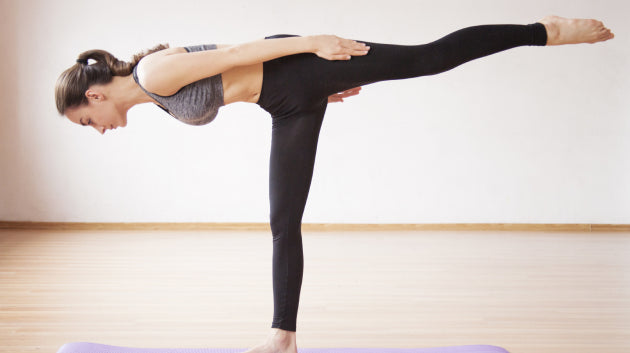
Standing on your mat, first place yourself in the warrior I posture. To do this, move one leg back and stretch your arms towards the sky. Then, lean on the leg that remained in front, knee slightly bent. Tilt forward until the back foot is off the ground. Ideally, the torso and the leg are in the same line, parallel to the ground. However, at the beginning, do not force yourself to raise the back leg; this will come with training. Stay in the posture for between 30 seconds and a minute.

This posture will strengthen all the muscles of the back, as well as the shoulders, but also the pelvis and legs. The warrior III posture will also be effective in strengthening concentration and channeling the mind.

You can practice these postures independently or together. This rather dynamic session will be preferred for a morning yoga class.

January 22, 2019
Portrait de la fondatrice du site Yogisa : Isabelle Fayolle

Portrait of the founder of the Yogisa website: Isabelle Fayolle

A nature lover, Isabelle Fayolle is a yoga teacher passionate about nutrition and science.

It was only natural that we asked him a few personal questions about his yoga practice, which we are sharing with you today.

How did you get into taking care of yourself?

I was lucky enough to grow up in the Pyrenees, in a protected environment. I have always loved doing outdoor activities. But I also wanted to leave my mountains at a very young age. At 17 I got a scholarship to study in Germany, it made me grow, the fact of leaving to confront the reality of life. Then I went through some pretty difficult times. And at 20 I took and passed a competitive exam to enter the civil service! I arrived in Paris, I quickly understood that it would not be in this path that I would flourish. But I really wanted to try my luck, to take other competitive exams. To help me during this period there were great encounters but also... the discovery of yoga. It allowed me to start a more harmonious relationship with my body, to learn how to manage my emotions (even if I still have a long way to go...) and also, the practice of yoga helped me with climbing! This allowed me to better manage my apprehension and gain flexibility: 2 assets for climbing.

But what yoga brought me most of all was, very quickly, the desire to pass on what I got from this practice. As I always said, "it did me so much good that I couldn't not share it!"

Then when I decided to teach yoga I also studied naturopathy which helped me even more to see the human being as a whole. And it is this very holistic vision of yoga that I like to share.

What practice for your well-being?

A yoga that fits my needs. Nothing wacky or extravagant, but rather attentive attention to my movements and breathing. It is in vinyasa yoga that I find myself the most, even if each yoga brings something! Surely because this meditation in movement reminds me of the mountains, climbing and these are sports that do me a lot of good.

What is the ritual of your practice?

I like to keep my practice simple, even minimalist: a mat (or not, from time to time, it changes!), cork blocks, why not a strap. If I don't have anything on hand, I love using my dictionaries instead of blocks! And on sunny days I must admit that I appreciate the luxury of being able to practice in a park, close to my home, facing Lake Geneva: a personal retreat!

What do you get out of it?

A time of pause. That’s how I see my practice. A pause that then infuses into my life and allows me to learn to better manage my stress and be more present.

What do you carry in your yoga bag?

Several mats, blocks, of course, straps, my notebook where I scrupulously keep all my sessions and a book. I love to combine yoga and reading, which is why I end my classes by reading to my students a short quote or a passage from a book that inspires me.

What is your favorite object/accessory?

Blocks! It was by taking Iyengar yoga classes that I finally realized that blocks were not "for beginners" but an essential asset for all practices. It brings me more creativity and play! Learning through play is really very important and so much more enjoyable.

What would be your advice for Tayrona Yoginis?

Keep it simple. Yoga doesn't require a dancer's body or the skills of a circus acrobat. It's a return to oneself, to simplicity, to breathing.

Where/how do you practice?

Often at home, in my living room, outside on sunny days, and preferably early in the morning... I'm an early riser (but I go to bed like a chicken) and I love waking up by doing meditation and yoga!

What is your mantra/favourite phrase?

This is a quote from Oscar Wilde: "Always aim for the moon, because even if you miss, you'll land among the stars."

Find Isabelle on her website and on Instagram .

January 19, 2019
3 postures de yoga de base, simples et leurs bienfaits

3 Basic, Simple Yoga Poses and Their Benefits

Many will tell you that it is always possible to evolve and improve in the postural practice of yoga. An asana (posture) can be approached in several ways, and executing it perfectly requires patience and above all training. However, whether you are a beginner or an experienced yoga practitioner, it is important to master the basic postures if you want to progress. These will allow you to familiarize yourself with notions of alignment and have benefits for the body and mind.

So grab your yoga mat . Roll it out in a quiet, not too hot place. These postures can be done in the evening for better relaxation and a moment to yourself after a long day at work.

1. Tadasana, Mountain pose

Tadasana is a basic posture, which is performed from the sun salutation.

Taking the Mounting Pose:

Standing on your mat , with your big toes and heels touching, engage your legs. To do this, press your feet flat into the floor. Tilt your pubis slightly forward and stretch your spine. Imagine a vertical thread running through you from your tailbone to the top of your skull. Move your shoulders away from your ears, lengthening your neck and pointing your fingers toward the floor. Bring your chin close to your chest and relax your facial muscles.

Benefits of Mounting Pose:

As you will see, tadasana is a posture that involves the whole body.

This posture works the deep muscles of the body and improves overall posture, toning you up. Held for several minutes, it will allow you to strengthen your concentration.

2. Balasana, Child's pose

Balasana is the asana used to rest between two postures. You can use it at any time during your practice if you feel that it is becoming too intense for you.

Taking Child's Pose:

Sitting on your heels, knees touching or apart, relax your upper body forward and place your forehead on the floor. The arms can be stretched forward, but most commonly they are brought back alongside the legs . Relax your shoulders and your whole body.

Don't hesitate to place a bolster under your shoulders if you feel that it pulls too much in your back or if you are pregnant. You can also position a small brick under your forehead if you suffer from neck problems.

Benefits of Child's Pose:

Balasana relaxes the spine and especially stretches the lower back, which will be even more beneficial after a backbend posture.

The gaze is turned towards the heart, which encourages us to explore what we feel, and to reconnect with the breath.

3. Savasana, the corpse pose

Most often, Savasana is performed at the end of a yoga class, but it is also possible to do it before beginning the practice.

Taking the Corpse Pose:

Lying on the floor, spread your feet hip-width apart, separate your arms slightly from your body and relax all your muscles.

Take a deep breath, expanding your stomach and chest as you inhale.

Don't hesitate to position a bolster under your knees so that your lower back touches the ground.

Benefits of Corpse Pose:

Savasana is the ultimate relaxation posture. It will allow you to relax deeply and empty your mind by focusing on your breathing.

January 17, 2019
Postures et accessoires de yoga

Yoga Postures and Props

Whether you are a beginner in yoga or already have a regular practice, the use of supports such as the brick, the bolster and the yoga strap can allow you to evolve in certain pauses. These accessories can be used as extensions of the body in order to stretch it deeply and make it easier to take the posture. As with your yoga mat, do not skimp on the quality of your yoga accessories. Prefer eco-responsible yoga equipment.

Here are some tips for using your yoga accessories properly in your practice.

1. Using the yoga brick in the triangle pose

    The triangle is an important asana in the practice of yoga. Trikonasana is a posture that stretches the legs and the entire upper body, engages the spine and engages the abdominal muscles.

    When taking the posture, your teacher will advise you to place your hand either on your shin or on the ground. You will also be able to place your hand on a brick, placed vertically or horizontally, depending on your flexibility. The brick is an excellent support for this posture.

    2. Using the strap in the seated pinch pose

      Pashimottānāsana, the seated forward bend, is a position that can seem frustrating to a beginner. Indeed, in this posture, we want to immediately reach our ankles or feet. But, very often, the posture provides too strong a sensation in the back of the legs, which can even cause cramps or discomfort!

      This is an asana that requires patience in order to see progress. For this, using the strap is really beneficial!

      You will pass the yoga strap behind the soles of your feet and grasp it on each side, with one end in your left hand and the other in your right hand. Here, the strap is an extension of your arms. The more you progress in Pashimottānāsana, the closer you will be able to bring your hands to your feet, until you no longer need the strap.

      Whether you use the strap or not, we recommend that you spread your elbows away from your torso, so as not to pull too much on your shoulders and to stretch your spine well without forcing.

      3. Using the Yoga Wheel in Child's Pose

        The yoga wheel is a little-known tool but it is very effective for many postures. You can use it as a support in the child's pose, Bālasāna. Take the posture normally, sitting on your heels and releasing your upper body forward, your forehead resting on the ground. Then, grab the hoop with your hands, in order to provide a great stretch to the back and shoulders. In this position, the neck is relaxed, so as to also stretch it gently.

        4. Using the bolster in the heart opening

          The yoga bolster is an accessory that yogis appreciate, because it is a large comfortable cushion. Generally, students like to sit on the bolster at the beginning of practice, for pranayama or meditation exercises. It is also possible to use it to practice heart-opening postures. You will then place the bolster under your back, between the shoulder blades. The simple fact of lying on it (making sure to be well centered) will give you a feeling of amplitude and pleasant letting go.

          And you, what accessories do you use in your yoga routine?

          January 15, 2019
          Portrait de la fondatrice de la marque de yoga YUJ : Hélène Duval

          Portrait of the founder of the YUJ yoga brand: Hélène Duval

          We are pleased to introduce you to Hélène Duval, founder of the YUJ yoga brand.

          We asked her for some tips on their yoga practices which I'm sharing with you today.

          Who is behind this eco-responsible French yoga brand?

          Hélène Duval was working in the press world when she discovered yoga in 2000. Her love of style and her entrepreneurial temperament quickly pushed her to launch a brand in her image. Having grown up between Bowie, Dylan, perfectos and denim, Hélène Duval kept her rock spirit while swapping her jeans for leggings.

          How did you get into taking care of yourself?

          I didn't wake up one day and tell myself that I had to take care of myself! I discovered yoga in 2000 in Paris on the advice of a friend who was returning from a trip to Los Angeles and who praised the benefits of yoga so I tried it and that's when I felt a deep well-being like never before.

          What practice for your well-being?

          My practice is above all a positive energy in everything I do, yoga is a vector but my driving force is this energy which bubbles within me and which I transmit every day whether on my yoga mat or in my life as a business leader.

          What is the ritual of your practice?

          I don't have a ritual because every time I practice my "mood" is different. What is certain is that I like to practice in my yoga studios YUJ YOGA STUDIO I enjoy practicing in the dark and under infrared heat that makes me sweat a lot.

          What do you get out of it?

          With each practice I feel cleansed, I feel alive and so good!

          What do you carry in your yoga bag?

          My water bottle and my little YUJ lavender relaxation cushion.

          What is your favorite object/accessory?

          Obviously my yoga mat the first mat I created YUJ in gradient.

          What would be your advice for Tayrona Yoginis?

          Accept yourself as you are and be yourself. In the age of social networks we tend to copy / paste our desires and our personality ... this creates frustrations and a deep malaise in many people. Yoga guides you to find your deep Self in the practice of yoga there is no cheating we are in the truth with ourselves.

          Where/how do you practice?

          I practice in my yoga studios, I have a great team so every week I explore more Yin practices or even more creative flows.

          What is your mantra/favourite phrase?

          Live every day like the best!!!!

          Find Hélène Duval on her Instagram: @heleneduvalyoga .

          January 12, 2019