Les bonnes raisons de faire une retraite de yoga

Good reasons to do a yoga retreat

Enrich your being with yoga vacations .

Have you heard of yoga retreats without really taking the plunge? What is it? It is a vacation where you practice yoga and meditation with moments of relaxation and sometimes even excursions. However, are you reluctant to treat yourself to a yoga trip ? Whether it is to take care of yourself, escape from your daily life or perfect your practice... going on a yoga retreat is an opportunity to meet other yogis, discover landscapes and/or your inner space and even gain vitality.

Learn yoga or improve your skills

The yoga course is suitable for yogis of all levels, whether you are a novice or experienced. However, you should know that you can find the yoga retreat for beginners . For apprentice yogis, it is a way to discover yoga, especially breathing exercises (Pranayama). For the more experienced, you will always learn whether it is philosophical or practical knowledge.

Slow down and take time for yourself

Between work and family life, it is sometimes difficult to take time for yourself? A yoga weekend is one of the best ways to recharge your batteries, relax, refocus and slow down the pace. Indeed, a yoga retreat is not only about practice, it is also moments of rest, introspection and visits to fascinating places. And all this in an idyllic and peaceful environment!

A disconnect from new technology

During your 2019 yoga course , new technologies are left aside. They instead leave room for introspection, nature and its openness to the world and human relationships. Perfect for a digital detox ! You'll see, you can do without it!

Meet other people who have the same passion as you

During your yoga retreat in India or other countries, you will be a whole group. And sharing the same passion, the same adventure and your daily life, you will weave links where real friendships can be born.

Live in the present moment

It's hard to be in the present moment when you have to anticipate the schedule for the next day or even the following week. During your yoga trip , everything is already planned. You won't have to think about anything, except to relax and let yourself be guided by the movement.

The discovery of marvelous landscapes

A yoga vacation is also the perfect time to discover new landscapes in a country that you sometimes don't know. Following the yoga retreat , excursions are planned to take you to incredible places.

Expand your worldview

The yoga journey is not only about discovering landscapes, but also a culture, traditions, perfumes, flavors... and a people, sometimes endearing. A way of seeing life differently!

Connecting with nature

Yoga retreats in France and around the world are often organized in the heart of nature in a wonderful place, whether in the countryside, in the mountains or by the sea. You will be able to connect with nature, while listening to the song of birds or the waves.

Reconnecting with yourself in moments of introspection

During your yoga vacation , it is also the time to meet with yourself to learn more about your inner world.

Boost your energy

Going on a yoga retreat is also a way to boost your vitality through practice, relaxation and healthy eating. You will feel energized and rested to cope with everyday tasks more easily.

Discover our yoga retreats in India, France or Ibiza in partnership with Les Amazones Parisiennes.

March 28, 2019
Comment construire une séance de yoga à la maison ?

How to build a yoga session at home?

Structure a yoga session well to benefit from the advantages of your practice.

You probably know about yoga classes, but you should know that you can also practice yoga at home. But how do you do it? How do you build a yoga session at home ? When you are a beginner, it is often difficult to organize the perfect sequence of yoga postures . In reality, there is nothing complicated, it is about finding the right time, the ideal place, defining your goals and following specific steps, from preparation to final relaxation through the asanas.

Set a duration for your yoga sequence

The sequence of yoga postures will depend on the time you want to dedicate to your yoga class . Do you have an hour in front of you? Then you can do a complete yoga sequence . However, do you have less than 60 minutes? Opt for a session without the inversion or balance asanas.

Determine the goals of your yoga session

Before starting your yoga class at home , ask yourself why you want to do yoga: to de-stress, reduce insomnia, boost your energy in the morning, increase your flexibility, let go, etc. But, you can also set goals to improve your practice, for example, succeeding in the tree pose .

The various steps to properly structure a yoga class

Preparation for yoga

Because of the hustle and bustle of everyday life, it is important to start your yoga session with a moment of meditation while observing your breathing, or even chanting a mantra. Why? Simply to calm your mind.

Don't neglect the warm-up

Just like sports, yoga is a physical exercise where there is a risk of injury. So, warm up to prepare your body and become aware of your morphology. How? Through stretching, bending and twisting. For example, you can do the sun salutation. But, know that there are other warm-up asanas such as:

  • the mountain (Tadasana),
  • the stork (Uttanasana),
  • the cat (Marjarasana),
  • the cow (Gomukhasana).

The sequence of asanas

Standing asanas

Once you are well warmed up, perform 1 or 2 standing yoga postures to boost your energy and improve your flexibility. Start, for example, with the mountain asana (Tadasana), then the chair pose (Utkatasana). Finish with the warrior balancing asanas I, II and III (Virabhadrasana) and the tree pose (Vriksasan).

Inversion postures

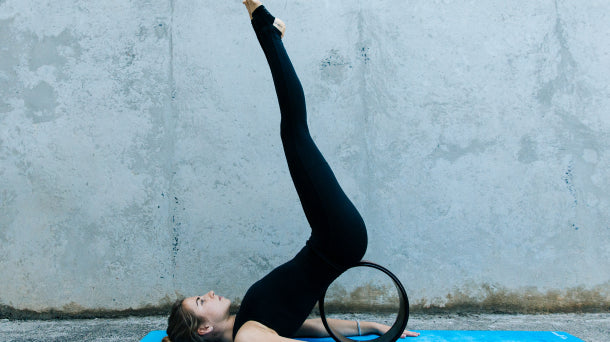
The structure of a yoga class also consists of inverted yoga postures that tone your nervous system and slow down blood circulation. If you are a beginner, opt for the candle pose (Sarvangasana) or the plow (Halasana). More experienced practitioners can do the inverted stretched support (Mukha vrksasana). Be careful not to hurt yourself!

Backward bends

Then do 1 or 2 yoga backbends to strengthen your back and stretch your abs. Try the grasshopper pose (Salabhasana), the bridge (Setu bandha sarvangasana) and the cobra (Bhujangasana).

Twists

Yoga twists are not mandatory, only if you have trouble linking with forward bends. There are various poses like Bharadvaja twist, Half Lord of the Fishes pose (Ardha matsyendrasana) and Reclining twist (Jathara parivritti).

Forward bends

Forward bends in yoga complement backward bends. They have the benefit of calming the mind and stretching your back. Here are some suggested asanas:

  • Western Stretch (Paschimottanasana),
  • Mahamudra,
  • the stork (Uttanasana).

Closing postures

Finally, perform closing asanas to relax your body and mind and prepare yourself for the final relaxation. Try the candle (Sarvangasana) then the fish (Matsyasana).

A moment of relaxation thanks to the asana Savasana

The last step is the final relaxation of yoga in Savasana position (corpse pose) for at least 5 minutes. This phase is important because it allows you to benefit from the benefits of the yoga session . It is up to you to choose between a silent meditation, with music or guided.

To help you build a yoga sequence , discover the yoga books on the Tayronalife website.

March 28, 2019
Portrait de Anaîs Durand, consultante et naturopathe

Portrait of Anaïs Durand, consultant and naturopath

Portrait of Anaïs Durand, consultant and naturopath: Anaïs is a brand strategy consultant. Two years ago, after returning from a trip, she decided to take the time to carry out a project that was close to her heart: training in naturopathy. Today, in addition to her professional activity and her studies, she co-organizes courses around reconnecting with the body, nature and healthy and gourmet food.
March 23, 2019
Avoir un ventre plat grâce au yoga, oui c’est possible

Getting a flat stomach through yoga, yes it’s possible

Who doesn't dream of having a flat stomach, even sometimes a few well-defined abs, especially as summer approaches. Know that no one escapes this desire. So, we go on diets, we start exercising or at least we make lots of good resolutions. But we quickly realize that it's more complicated than that. Especially if we are a woman and even more so as we get older. That's why today, we offer you a little anatomy, yoga postures to do at home on your yoga mat to deeply strengthen your muscles, rebalance and strengthen your body and your abdominal belt. Practicing yoga will allow you to stand up straighter and therefore reduce your back pain, have a flatter stomach, and eliminate your tension in the neck and shoulders .

Here are the 5 muscles that make it up.

And you will notice that when reading this article, a yoga session works all of these abdominal muscles.

1. The straight muscle or rectus abdominis

This muscle runs down from the middle of the rib cage to the pubis.

It is divided into two equal halves and into 7 or 8 horizontal sections. It is this muscle that gives the "chocolate bars" much appreciated by these gentlemen.

This is the muscle that we work when we do “abs”.

In yoga, this muscle is very used during postures such as the boat (Navasana), the crane (Bakasana), the plank (Chaturanga Dandasana)

2. The oblique muscles

The internal and external oblique muscles support the body and allow the rotation of the spine. They can be worked with rotation exercises; and we see that one side tenses and the other relaxes.

In yoga there are the postures : Triangle (trikonasana), wide angle (utthita Parsvakonasana), half moon (Ardha Chandrasana)

3. The transverse muscles

It is a deep horizontal muscle that extends from the rib cage to the belly. It supports the organs and holds the body up. It exerts gentle pressure on the intestines and tenses in balance positions.

Recommended postures are : Tree Pose (Vrksasana), Warrior II (Virabhandrasana II) and Handstand (Adho Mukka Vrkasana)

4. The square muscles of the loins

The quadratus lumborum muscle is located in the back. It plays an important role in twisting, standing postures and bending.

Head to Knee Reversal (Parivrtta Janu Sirsasana) Reversal Chair (Parivrtta Utkatasana)

5. The Psoas major

The muscle extends from the rib cage and lower back to the top of the thighs.

It is used a lot especially when you lift a leg, raise your buttocks, or when you turn a leg outwards or turn your spine to the side.

The Tree (Vrkasana) and the Bridge (Bandha Sarvangasana)

There you go, all you have to do now is practice on a good eco-friendly yoga mat. Enjoy your session.

March 21, 2019
Portrait de Victoria Bardiau, Yoga teacher, Graphic designer & Content creator

Portrait of Victoria Bardiau, Yoga teacher, Graphic designer & Content creator

Victoria Bardiau, or Mila, is a young Belgian yoga teacher, passionate, curious and creative. She loves life, people and surprises. Yoga teacher, horse rider, social media enthusiast and sharer of a more conscious life, graphic designer and content creator, organizer of events, workshops and retreats, traveler, nomad, dreamer...

It was only natural that I asked him a few personal questions about his yoga practice, which I am sharing with you today.

How did you get into taking care of yourself?

The beginning is often the same… Love. Or rather, the absence of love.

After a heartbreak, I found myself alone. Alone with myself, alone with my fears, alone with my desires. No one left to tell me that I was beautiful, strong or intelligent. No one left to make decisions for me. It was the precipice. Abandonment. Loneliness. The truth. I was unsure of myself, I doubted, I was afraid, I was incapable of being alone, I was dependent, on the love of others and on everything that could take me away from feeling what I really felt deep down inside.

By finding myself facing my past, my demons, I realized that my thoughts and emotions shaped my life and the events that punctuated them. What did I need to understand? What did I need to change to change my reality? I always felt that I was a little different from others, sometimes too sensitive, sometimes too creative, sometimes too lively. I finally started to educate myself, to read, to discover new approaches, and then, one day, a friend took me to my first yoga class… It was magical. It was the trigger. I cried a lot during my first classes and that's when I understood that something was really happening and that my intuitions were right.

What practice for your well-being?

Yoga, horse riding, sports, nature, travel, meetings, books, creativity, writing…

What is the ritual of your practice?

I'm not very disciplined when it comes to myself, so I prefer to practice in a studio. But I still sometimes practice alone at home. In this case, I put on a playlist that matches my energy of the moment and that will help me release an emotion that seems blocked. I start by writing in my little notebook of intention and gratitude, then I flow, often with my eyes closed, and I let myself be rocked... I always keep my notebook close to me, because I often understand or unblock certain things in the middle of practice.

What do you get out of it?

An infallible serenity. Sometimes the burning desire to move forward, sometimes the need to rest. But each time, it gives me the answer to my questions and invites me to do what is right for me and for my body, which I often tend not to listen to enough.

What do you carry in your yoga bag?

Always my water bottle (DrinkBig Bottle), my notebook in which I drew and wrote LOVE, my white rose essential oil and my rescue, Bach flower.

What is your favorite object/accessory?

My mala that I made myself. There is a knot between each of the beads and I chose with a very special intention each of the stones that adorn my necklace.

What would be your advice for Tayrona Yoginis?

Let's leave our ego outside our mat. Let's not try to go too fast, too far. Let's take the time, the time to listen to our body, the time to feel, the time to observe, the time to enjoy each posture. Let's realize that the way we are, the way we act, the way we react on our mat is only a magnificent metaphor for life, our life. What you unlock on your mat will unlock in your life, and vice versa.

Never skip Savasana. First, because it is the best posture, second, because it is the posture that allows our body to integrate our practice.

Where/how do you practice?

I like to practice in the morning, because it allows me to have an intention for my day and to start with a clearer, more serene, more lively body and mind.

I practice at Yoga Room in Brussels and at Casa Vinyasa in Lisbon. Otherwise, at home, in a park, on the beach…

And then, finally, I practice yoga all the time, every day, since it has become my philosophy of life.

What is your mantra/favourite phrase?

Love life!

It comes from mvy (pronounced love life), which comes from Mila Victoria Yoga, which is my Instagram handle. It sums up very well who I am, what I do and how I get back up after every fall.

milavictoriayoga on Instagram

March 16, 2019
Comment choisir une sangle de yoga éco-responsable de qualité et solide?

How to choose a quality and sturdy eco-friendly yoga strap?

Choose an eco-responsible, quality and sturdy yoga strap .

Are you a beginner in the practice of yoga and you are not very flexible? Or do you want to improve in certain postures without injuring yourself? The yoga strap is made for you. It is an aid to flexibility while extending your arms, without losing good alignment. However, there are several models and you do not know which one to buy. Don't panic! Choosing a yoga strap is very simple. Select the right size, the strongest buckle, an eco-responsible material but also a color that inspires you. Be careful, do not use a yoga mat strap, because it is not suitable for practicing asanas and there is a risk that it will tear.

Buying the Right Size Yoga Strap for Your Body Shape

First of all, you will choose a yoga strap according to its dimensions. Just like meditation cushions and bolsters, there are various sizes of yoga straps . Note that the standard is 2.50 m. However, if you are taller than 1.78 m, opt for a yoga accessory of at least 3 m (model L). But what about the width? The thinnest strap measures 25 mm and the widest 40 mm. Choose its dimensions according to the yoga postures to be performed. We recommend the 2.50 m x 38 to 40 mm wide strap. This is the best known by yogis and also the most used.

A strong quality yoga strap loop to withstand tension

What would a yoga strap be without a buckle? Whether rectangular or rounded, this finish is used to block it at the length that suits you for the practice of your asanas. It is also more common to see metal buckles on the market, because they have the advantage of being very strong and not breaking. However, there are also buckles made of reinforced plastic. We recommend the first option for a safer adjustable yoga strap .

Choosing an eco-friendly yoga strap

Then comes the choice of the material of your yoga accessory . Prefer eco-responsible materials such as the yoga strap made of cotton or recycled material to be in accordance with the practice of yoga. Beware of synthetic and non-ecological textiles that will burn your skin because of friction.

Choose a yoga strap with an inspiring color

You may have noticed the different colors of yoga straps ? Plain or printed, it's up to you to select the one whose color inspires you. Did you know that each color has one or more virtues?

  • Blue: promotes listening to others and inner peace (linked to the throat chakra),
  • Green: encourages harmony, optimism, zenitude and balance (linked to the heart chakra),
  • Black: helps to empty the mind,
  • Violet: evokes serenity, idealism and purity (attached to the crown chakra),
  • Orange: stimulates creativity and communication (linked to the sacred chakra),
  • Red: gives inner strength (linked to the root chakra).

Discover our quality yoga straps on the Tayronalife store.

March 14, 2019
Portrait de Kahina Medjnah, aromathérapeute et professeur de yoga

Portrait of Kahina Kettane, aromatherapist and yoga teacher

Portrait of Kahina Kettane, aromatherapist and yoga teacher: specialized in Hatha, Vinyasa, Ashtanga Yoga which she has been practicing for 4 years. She is also an aromatherapist practitioner, she combines the benefits of essential oils with Yoga.
March 10, 2019
Portrait Mélanie Veyrond, kinesithérapeute et yoga thérapeute

Portrait of Mélanie Veyrond, physiotherapist and yoga therapist

Mélanie is a trained physiotherapist, yoga teacher, yoga therapist and author. She is passionate about movement, the body and its unsuspected resources. She alternates her life between southern Ardèche and Paris.

In 2007, she obtained her diploma in Masso-Kinesitherapy. In parallel with her professional activity, she began practicing Yoga. For her, it was a real "revolution" and a way to self-treat. After several years of practice, she decided to train in teaching Hatha Yoga at the Sivananda centers in India in 2014, then she deepened her knowledge with Yogatherapy with Doctor Lionel Coudron in Paris.

How did you get into taking care of yourself?

It came to me as obvious. Through my job as a physiotherapist, I couldn't take care of others without taking care of myself. During my first professional experience, Yoga classes were held just above the office. What a treat! It was Yoga that came to me in a way. I discovered in this art of living a way to self-treat.

What practice for your well-being?

A regular practice, every day, morning and evening. I listen to my body and give it what it needs depending on the moment. Sometimes a dynamic Yoga and at other times Yin.

What is the ritual of your practice?

I am lucky to live in a big house, and to have a dedicated space for my Yoga practice and an altar for my meditation with lots of objects, photos that are dear to me and that inspire me. Every morning I settle down in this place, I observe the nature outside, then my internal weather, my breathing… and I often start with pranayama before doing my asanas and my meditation.

What do you get out of it?

Of Life. Of happiness, without my practice I would not be able to start my day. Yoga gives movement back to the body. And thus gives movement back to life.

What do you carry in your yoga bag?

In my Yoga bag there is always my Yogini notebook, where I write down what I felt during my practice, but also the new spaces I explored. What is great is that with each practice there is always something new.

What is your favorite object/accessory?

I have several…but the one that comes to me is my semi-precious stone mala that I made. I love stones and I always have some with me; to the point that I recently created with a friend a brand of Malas “Jayamala Paris”; where we have created several malas and where yoginis have the possibility of mounting them themselves.

What would be your advice for Tayrona Yoginis?

Continue to be explorers of your body and your heart. Roll out your mat every day as if it were the first time and walk with joy, sensitivity and authenticity. The practice of Yoga is an infinite richness that transforms life.

Where/how do you practice?

Most often at home, in the studio, during retreats. I'm about to leave for India in a few days for a month, I'm over the moon!

What is your mantra/favourite phrase?

I have several too, I love to sing and I often chant this simple mantra: "Om shanti om"

One of my first favorite phrases:

“Do good to your body so that your soul wants to stay there”

Then:

“Life is like riding a bicycle, you have to keep moving to keep your balance.”

If you want to know more about Mélanie:

the website: www.melanieveyrond.com 

Instagram and Facebook: @melanieveyrondyoga.

March 02, 2019
Portrait d'Emilie Titon, professeur de yoga amoureuse de la vie

Portrait of Emilie Titon, yoga teacher in love with life

Emilie teaches viniyoga and vinyasa in Montpellier. Passionate about observing the body between yoga, dance and circus. In love with the simple pleasures of life, such as walks in nature, sharing and exchanging with friends, music and vegetarian cuisine.

It was only natural that I asked him a few personal questions about his yoga practice, which I am sharing with you today.

How did you get into taking care of yourself?

After years of professional and personal life at a frantic pace, my body and mind said stop. I then made a professional reconversion in dance and yoga 5 years ago. This allowed me to completely reconnect, to finally listen and take the time to live. And above all to be on my life path!

What practice for your well-being?

To wake up gently every morning, I take the time to observe nature, its colors, the sky, the birds in order to connect myself to the day ahead. I practice yoga several times a day as well as the piano, which I recently took up again.

It is also very important for me to cook every day with local and seasonal products. It is part of my balance.

What is the ritual of your practice?

I listen to the needs of the day, that is to say how I feel (if I am tired or more agitated), and then I adapt my yoga practice accordingly. My ritual is therefore the observation of the present moment and listening to the body.

What do you get out of it?

Greater balance and a better understanding of myself, which allows me to listen more to others.

 What do you carry in your yoga bag?

My water bottle with water and a piece of fresh ginger, to keep in shape.

A notebook with drawings of my practices, which change every week depending on the season and the needs of the students.

What is your favorite object/accessory?

My yoga mat of course!! It follows me everywhere.

What would be your advice for Tayrona Yoginis?

Take time for yourself, treat yourself, take care of yourself... Say yes, say no, be yourself, laugh, love and continue to learn every day.

Where/how do you practice?

Before giving a class, I always arrive early to practice and have some time to myself.

What is your mantra/favourite phrase?

I believe that even in the difficult situations we may encounter in life, there are things to learn and a positive side to be found.

This is why I really like this quote from Confucius: "Joy is in everything, you have to know how to extract it."

Website: https://anjaliyogamontpellier.com
Facebook: https://www.facebook.com/anjaliyogamontpellier

Instagram https://www.instagram.com/anjaliyogamontpellier/ .

February 23, 2019
Portrait de Nathalie Angly, professeur de yoga en Alsace

Portrait of Nathalie Angly, yoga teacher in Alsace

By training, Nathalie Angly is a state-certified architect. When she took her first yoga class, it was love at first sight. The feeling of having finally achieved what she had always been looking for. It was like a "return home" after a long journey. From then on, she never stopped practicing, became a yoga teacher and it was her passion for yoga that made her abandon her original profession to devote herself fully to yoga.

In 2013, she created a yoga school in the heart of the Alsatian countryside that continues to thrive. As such, there are also plenty of dedicated yogis in the countryside who are very happy to be able to practice seriously there. Today, Nathalie offers training courses to become a yoga teacher.

It was only natural that I asked him a few personal questions about his yoga practice, which I am sharing with you today.

How did you get into taking care of yourself?

Even as a child I felt that the body was important because it is our vehicle that transports us from birth to death through this human adventure. And there is no way to change it! And it is still much more pleasant to live this adventure with a vehicle that works perfectly well. Also I felt that the psyche was malleable and that it maintains a close link with the body. On the other hand, believing I was doing the right thing, I pushed myself to the extreme for years, working too much, doing excessive sports and imposing very strict dietary restrictions on myself. Result: at 30 I collapsed mentally, psychically, morally. It was at that time, by coincidence (who really believes in coincidence?) that I discovered yoga. From there, I got back on my feet and this time, I knew that it was the RIGHT PRACTICE for the body and mind.

What practice for your well-being?

I do not neglect my physical body and Asanas are the only thing it needs. I pay attention to what I eat and drink, but without exaggerating. I follow a quasi-vegetarian diet and I minimize alcohol consumption. For my mental health, I walk daily in the forest or in nature far from civilization and I meditate regularly.

What is the ritual of your practice?

If it's at home, I light an incense stick and a candle. That's it. As a beginner in personal practice, the ritual is a great help and a very good way to get into the mood. Over time, I was able to detach myself from rituals. I like being alone and not feeling like I'm being watched. My practice is not a show, it's a moment of intimacy.

What do you get out of it?

A powerful moment of intimacy with my Higher Self. A moment out of time, a moment of connection with the Divine. It is My Moment in the day.

What do you carry in your yoga bag?

I don't have a yoga bag and I don't take anything with me when I travel. I always find a way to practice. Oh yes: leggings! It's true that it's a very average way to practice the part jeans physique.

What is your favorite object/accessory?

A mala: necklace with 108 rudraksha seeds.

What would be your advice for Tayrona Yoginis?

Diligence, patience and curiosity are the essential ingredients on the path of Yoga. And contrary to what I observe, the vast philosophy of yoga is not to be neglected in favor of physical practice, but it is the key, the base, the foundation for the right understanding of Yoga.

Where/how do you practice?

I practice at home, always in the same room. In the meantime I know many ways to practice yoga, from super physically intense to contemplative still sitting, and all the variations in between. I practice according to my needs, I try to understand what I really need today.

What is your mantra/favourite phrase?

Yoga is the martial art of the soul and your opponent is the strongest you have ever faced: your ego.
Yoga is the martial art of the mind and your opponent is the strongest you have ever faced: your ego.
To find out more Nathalie:
February 16, 2019
Comment rendre son tapis de yoga Pro Manduka plus adhérent ?

How to make your Pro Manduka yoga mat more grippy?

A more grippy Manduka yoga mat thanks to a natural and ecological method using sea salt.

Have you finally purchased the Pro Manduka yoga mat that you've been eyeing for months? This quality yoga accessory is a must-have for yoga mats, particularly for its comfort, density, high resistance and grip. But also, what makes it different from other floor mats is its lifetime warranty. However, you tested it during a yoga session and noticed that it wasn't as non-slip as you wanted? Are your hands and feet slipping? And does it bother you when performing certain asanas? Even if as you practice, your accessory will become more and more non-slip, do you want to speed things up? Don't panic, we recommend a very simple and eco-responsible method to make a yoga mat more grippy .

What do you need to make your Manduka Pro yoga mat more grippy?

To speed up the grip of the Manduka yoga mat , it's easy, because you only need:

  • Your carpet,
  • Sea salt,
  • A clean, damp cloth.

The Simple Method for a More Non-Slip Manduka Yoga Mat

Here are the steps to strengthen the grip of your yoga mat :

1/ Unroll your yoga mat flat on a flat surface,

2/ Sprinkle the entire carpet generously with sea salt,

3/ Homogenize (rub gently) the salt on the carpet so that it is everywhere, 4/ Leave to rest for 24 hours,

5/ Remove the salt with a clean, damp cloth until there is none left,

6/ You can practice your postures.

Discover our Manduka yoga mats on the Tayronalife store.

February 14, 2019
Portrait d'une professeur de yoga à Bordeaux : Alice Ochronowicz

Portrait of a yoga teacher in Bordeaux: Alice Ochronowicz

My name is Alice, I am 29 years old and I am a yoga teacher in Bordeaux. I love traveling, the ocean, the sun, I love music, laughing and enjoying life.

It was only natural that I asked him a few personal questions about his yoga practice, which I am sharing with you today.

How did you get into taking care of yourself?

I have always been drawn to yoga and well-being in general.

What practice for your well-being?

Well-being involves many things. I pay attention to what I eat because I know that food plays a huge role in the mind. I take a lot of time for myself, I love getting massages and I do face and hair masks every week. I try to see the positive side of everything (even if it's not always easy) and above all I practice yoga every day which, by unblocking my body, unblocks the knots in my mind!

What is the ritual of your practice?

I usually start by putting on a comfortable outfit (even if I spend my life in yoga clothes) and making space in my apartment (I have to move the table in my living room). Then I roll out my mat, dim the lights and set up a few candles. I light my incense, and lie down in savasana for a few moments. I empty my mind and think of an intention. Then I put on some music and start dancing on my mat. I slow down the music and often switch from rap or pop to mantras and at that point I close my eyes and my body knows what it has to do to relax and create space within me.

What do you get out of it?

I like to say that before a yoga session you have 100 problems and after you have 10. It helps me to relax, to put things into perspective, to gain altitude, to calm down.

What do you carry in your yoga bag?

I usually already have my yoga outfit on me, but if I don't, I put it in my bag. I also bring a bottle of lemon water or an infusion. And that's about it!

What is your favorite object/accessory?

My mala beads. But it just broke, it has reached the end of its cycle. So I have to, with great regret, change it and set new intentions.

What would be your advice for Tayrona Yoginis?

I would say that you have to stay focused on your mat. It doesn't matter if your neighbor on the mat has mastered the splits perfectly or if she can put her foot behind her head! What you have to do is stay focused on yourself and work with what you have today. Some days it will be easier than others to let go and other days you will have to be extra kind to yourself. We are here to do ourselves good, to take care of ourselves.

Where/how do you practice?

I usually practice at home. I let my body do the postures it needs. I love practicing outdoors.

What is your mantra/favourite phrase?

Let come what comes and go what must.

Find Alice on her website and on her Instagram .

February 09, 2019