French Yoga Community
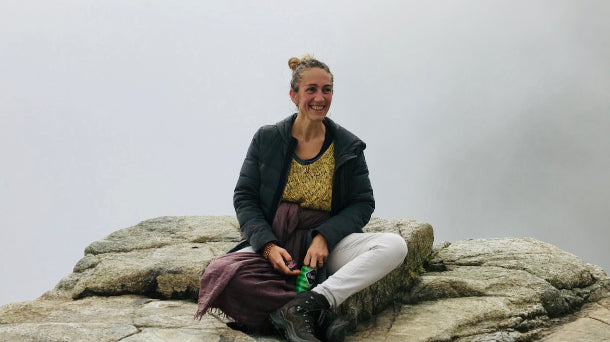
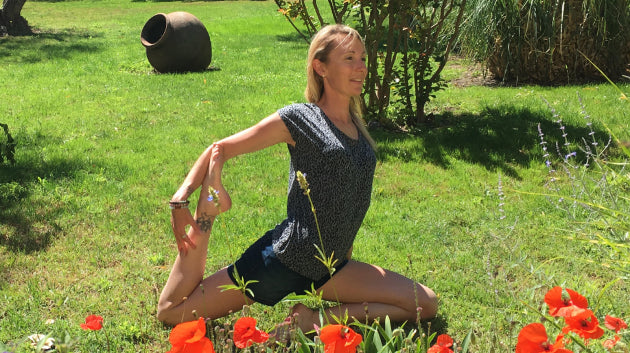
Portrait of Audrey Badin, future yoga teacher
Having practiced classical dance for over 10 years, Audrey had a decisive encounter with Yoga a year ago. Rolling out her mat for the first time in various classes in Montpellier, she chose to devote herself to regular practice. She was able to truly discover and understand how yoga could extend beyond her mat and invite itself into all aspects of her life. In keeping with her daily practice, she chose to train at the “Theyogiinme” training center (200 hours) during the month of August.
How did you get into taking care of yourself?
I am passionate about life; I love traveling, adventure, nature, reading, writing, and above all I love yoga. My yoga adventure first started online where I followed my first classes from my living room. Little by little, I integrated yoga into my daily life by discovering new postures and new sequences every day.
But, it was especially during different yoga classes with different professionals in Montpellier that I understood that I would dive wholeheartedly into this new adventure.
That life led me on the path of yoga is an incredible opportunity and wealth. Very quickly I took different courses and then I decided to turn to a yoga teacher training course delivered by "THEYOGIINME" (200hrs) in immersion during the whole month of August in Morocco.
What practice for your well-being?
Eager to learn, I develop my practice thanks to the different teachers I have met on my path. My practice mostly takes place like this:
- warm-up
- greetings
- sequence of dynamic postures
- then I let the pressure drop, a few simple and slow postures
- and to finish with relaxation!
What is the ritual of your practice?
I practice every day, while trying to find a balance between my job (special education teacher) and the practice of yoga. I would say that "yoga is a whole." It can become a way of life if we choose to invest ourselves fully in it, but it is not there to impose anything on us.
What do you get out of it?
Yoga helps me find my external (physical) alignment every day, but also my internal (emotional and mental) alignment. Yoga soothes me, calms me and makes me feel good.
What do you carry in your yoga bag?
Naturally, I take my water bottle and my mat!
What is your favorite object/accessory?
I love my Baya brand yoga mat!
What would be your advice for Tayrona Yoginis?
Yoga is not a practice where you have to be the best, it is an art of living where the goals to be achieved are for yourself. It is not a question of comparing yourself, or being flexible or strong. It is a process that sometimes takes a little time but which leads us towards general well-being!
Where/how do you practice?
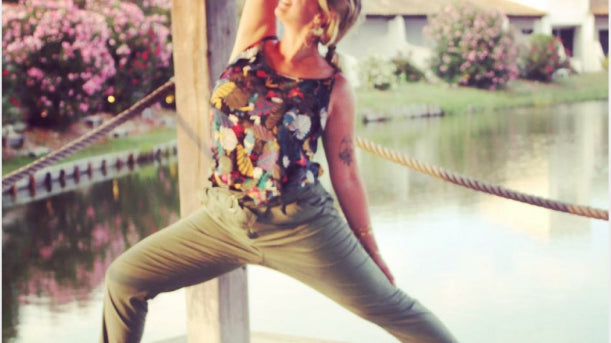
Most often outdoors in nature. I love practicing yoga outdoors, it gives me a feeling of fresh air and freedom that I don't find when I practice in my apartment. I also practice indoors during group classes.
What is your mantra/favourite phrase?
“The wisdom I seek is within me.”
What are the yoga strap poses?
A yoga strap for safe stretching.
The adjustable yoga strap is an accessory that may seem useless to you. You must be saying to yourself: "but, I can do my postures without it!". Think again, in Iyengar Yoga, it allows you to practice the art of asanas more easily and without injuring yourself. It is ideal if you are a beginner in yoga and/or if you are not very flexible. This yoga accessory will extend your body, whatever your size and flexibility. In this article, we give you examples of postures with yoga strap , which are generally stretches. The list is not exhaustive, because there are many asanas to perform.
Using a Yoga Strap for the Forward Bend Pose
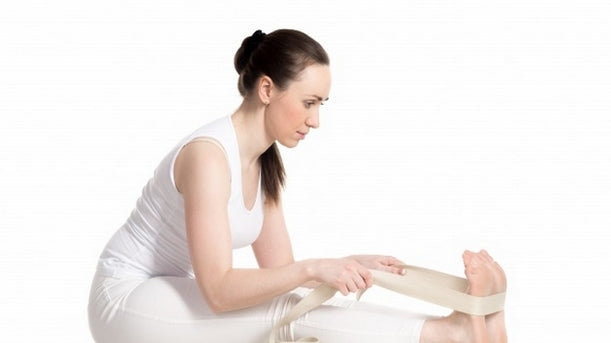
You probably know the pinch pose. Also know that it can be done with a quality yoga strap . Indeed, this asana stretches the back of the legs and if you are not flexible, it can be difficult to touch your feet or worse you will bend your back. This is where your yoga accessory comes in. Place your strap at the soles of your feet while holding one end in each hand. This will keep your back well aligned.
Yoga pose with strap from stretched arm to big toe
The asana of the extended arm to the big toe can be practiced standing or lying down. How to do it? Balance on one leg while extending the other to the side. Finally, grab your big toe. Do you have trouble reproducing this position because you lack flexibility? Are you not aligned as you should be? Then, help yourself with an adjustable yoga strap . This yoga posture with strap allows you to gently relax, while keeping your back straight. Position your accessory on the sole of the foot in the air and hold the strap with the hand placed on the side of the leg in height.
Cow Head Pose with Yoga Prop
The cow head asana allows the opening of the chest. Simply, you just have to join your two hands between your shoulder blades (one upwards and the other downwards). You can't do it? Then, perform this posture with a yoga strap . In this way, you will gradually bring your hands closer together without hurting yourself.
Yoga stretching strap: Dancer's pose
The dancer's pose, as the name suggests, consists of standing on one leg. Raise the other leg backwards and grab it with your hand on the same side. If flexibility is not there, place a strong yoga strap around your foot and hold each end in your hands. With this yoga strap stretch , you won't damage your back by bending it too much.
Boat Pose Using a Yoga Strap
The boat pose helps you anchor yourself more easily. Be careful, it also works your abs! Sit balanced on your buttocks, legs straight and back straight. It's not so easy, is it? We recommend using a yoga strap . Place it under the soles of your feet and hold each end in one hand.
Discover all our eco-responsible yoga straps on the Tayronalife store.
Portrait of a Dance Enthusiast: Rebecca Sanchez
This daily practice allows her to dance again in harmony with her body and mind to transmit it through her heart, out of love for the art of yoga.
How did you get into taking care of yourself?
A little over 5 years ago, during my second pregnancy, I began to become aware and really interested in natural well-being and ecology.
I changed a lot of things in my life, including my way of consuming and eating, my care routines. And so it was quite natural that I moved towards a more well-being physical practice, first with Pilates, then yoga, which was a revelation.
What practice for your well-being?
It depends on my mood, my state of mind and my physical state of course. Well-being comes in different forms, so it can be a walk in nature, gardening, a treatment or obviously a practice of asanas, meditation, relaxation.
What is the ritual of your practice?
I like to create an atmosphere for my practice, burn incense, light candles…
I like to start with a meditation to refocus myself, possibly mantras and/or pranayamas, then a more or less intense practice depending on my state, my desire, my needs, and finally finish with a relaxation to integrate the effects of my practice. And all that to music!!
What do you get out of it?
More self-confidence, more serenity. Mental and physical calm.
What do you carry in your yoga bag?
My yoga mat, a notebook in which I write down my sequences and anything that comes to mind, a mini Bluetooth speaker, my stones…
What is your favorite object/accessory?
My little singing bowl and my wind chimes. The sounds and vibrations they emit resonate in me in an indescribable way.
What would be your advice for Tayrona Yoginis?
To sit down, become aware of your breathing and meditate to refocus, awaken and be. The power of meditation is incredible.
Where/how do you practice?
Very often in my living room or in the middle of my kitchen, with the children and the life of the house around me…
I'm not very regular in my solo practice, so I like to practice in a group with friends or in the studio.
What is your mantra/favourite phrase?
Let's say that the one I have in my skin, which is "inked" in me, is:
"Happiness is only real when it is shared"
Christopher McCandless (Into the Wild)
Shitali breathing to combat heatwave
Shitali breathing helps you reduce heat stroke.
In summer, the heatwave is omnipresent and does not let go of us. Headaches, thirst, nausea, dizziness... the symptoms of heatstroke are not far away. So, yes, it is very important to hydrate yourself well. However, sometimes that is not enough to feel better. Are you dreaming of a miracle cure to no longer suffer from the heatwave? Well, we have found the solution. Sitali yoga breathing , linked to the art of yoga, is an excellent and simple way to cool down your body and mind. More experienced yogis may already know it! In this article, we explain how to put this hatha yoga breathing into practice.
Why does shitali breathing refresh the body and mind?
You must be wondering how a simple breath can cool the body. It is a kind of natural air conditioning. Just like birds open their beaks to cool their bodies, humans can do the same thing. By inhaling through the mouth, air enters. And thanks to the tube formed, you salivate more. The oral cavity and throat are cooled. Subsequently, the air is propelled towards the palate in connection with the nasal cavity. The breath will stimulate the central nuclei located in the brain which are the thermostat used to regulate the body temperature. Thus, you avoid headaches due to heat. But, that's not all!
From a more spiritual point of view, this refreshing yoga breathing also helps to cool the mind by promoting the circulation of Prana energy (vital energy) throughout the body. You will be relaxed and recharged!
How to perform shitali pranayama?
Shitali hatha yoga breathing is performed by following several specific steps:
- First, get into a comfortable sitting position (for example on a meditation cushion ),
- Stick out your tongue and form a tube with it (lengthwise),
- Breathe in gently through your mouth and bring the breath towards your lower abdomen and then your rib cage (and towards other areas where you feel hot),
- Exhale calmly and at length through your nose,
- Then repeat at least 10 to 15 times. Avoid this cooling pranayama in winter, if you are asthmatic, have toothache, cold and sore throat.
What to do if you can't practice Shitali pranayama?
You can't get into Shitali position ? Don't panic! Only 2/3 of the population can do it, because it's genetic. But don't get discouraged! For every problem, there's a solution. In this case, practice Shitkari breathing . But how to do it?
- Glue your upper and lower teeth,
- Open and stretch your lips,
- Place your tongue against your teeth,
- Inhale through your mouth and exhale through your nose, mobilizing your abdomen and chest,
- Bring the breath to the areas where heat accumulates,
- Continue for at least 10 to 15 cycles.
If you would like to discover other breathing exercises (Pranayama), read the book Respire available in the Tayronalife store.
The history of yoga through yogi masters
Originally, yogi masters were only men, but in the 1960s the practice of yoga became more feminine.
When you practice yoga, your teacher will quickly tell you about yoga masters and their teachings. Hatha, Ashtanga, Kundalini, Vinyasa, Iyengar... So many styles of yoga for all needs and tastes. But, you may feel lost in the midst of these well-known spiritual women and men with inspiring stories. Yoga trends have evolved over time to adapt to the modern world. Discover the history of yoga through yoga gurus .
The beginnings of yogi masters with Hatha yoga
Yoga originated in India. At first, this art was practiced only by men, or even transmitted in secret from master to disciple. The oldest style of yoga is Hatha Yoga, dating back to before the 15th century, inspired by the Yoga Sutras of Patanjali and the text Haṭhayoga-Pradīpikā by Yogi Svātmārāma. The best-known Hatha yogi master is Sri Tirumalai Krishnamacharia (1888 – 1989), an Indian yoga teacher . In 1924, he created a yoga school in Mysore, where he taught. He also passed on his knowledge to other great yoga masters such as Pattabhi Jois, BKS Iyengar and Indra Devi, but also his sons TKV Desikachar and TK Sribhashyam (1940 - 2017). In France, Shri Mahesh Ghatradyal (1924 – 2007) became the first Hatha yogi master and Felix Guyot created the first Hatha school in Paris in 1945.
Famous Yogis Who Evolved Hatha Yoga
BKS Iyengar (1918 - 2014), brother-in-law of Sri Tirumalai Krishnamacharia and Indian Hatha Yoga master yogi, is particularly famous for having invented Iyengar Yoga after being the victim of a scooter accident. This type of yoga uses props to avoid injuries. Sri T. Krishnamacharia's son, TKV Desikachar (1938 - 2016) spread his father's teachings through his institution Krishnamacharya Yoga Mandiram (KYM). He is also at the origin of Viniyoga, which adapts to each yogi and is inspired by Hatha Yoga. As for Bikram Choudhury (born in 1946), an American yoga guru of Indian origin, he is the creator of Bikram Yoga, inspired by Hatha. It is a very dynamic style of yoga practiced in a room heated to 40 ° C.
Pattabhi Jois (1915 - 2009) was an Indian Ashtanga yoga master and founder of Vinyasa Yoga. Ashtanga was taught in Mysore, India. In the 1960s, it was thanks to André Van Lysebeth, a disciple of Jois, and his book I Learn Yoga, that Western students came from all over the world to study. Pattabhi was also Sting and Madonna's yoga teacher , but he also trained Ashtanga teachers. In the 1980s, this style of yoga spread to the United States under the name Power Yoga, thanks to Beryl Birch Bendere. However, other sources report that Byron Baptiste and Bryan Kest were the founders.
Other spiritual masters modernizing the practice of yoga
Swami Vivekananda (1863 – 1902) is the first spiritual master to have spread yoga in the West (in the United States) in 1893, after having made the decision to live in poverty. Kundalini Yoga finds its origins through this yoga master . Subsequently, this type of yoga was spread in California, in the 70s, by another yoga guru : Yogi Bhajan (1929 - 2004). As for the Indian yoga teacher Swami Sivananda (1887 – 1963), he is the founder of Integral Yoga following his meeting with his yogi master Swami Vishvananda. Subsequently, he trained Swami Vishnudevananda (1927 - 1993) who in turn created Sivananda Yoga.
Also discover other famous yogis :
- Babacar Khane is the originator of Egyptian Yoga,
- Roger Clerc is the author of the book The Yoga of Energy published in 1976 and who created several schools including the Academy of Yoga of Energy in 1978,
- Lionnel Coudron, a yoga teacher and doctor, sets up the Yogatherapy Institute, showing the link between yoga and health,
- Finally, John Friend, an American yoga teacher , invented Anusara Yoga in 1997.
Women can be yogi masters too
The first female yogi master was Eugenie Peterson (1899 – 2002) born in Russia. Later, in 1927, she went to India and took the name Indra Devi. This is how she discovered the country thanks to Jiddu Krishnamurti (1895 – 1986) who had BKS Iyengar as a teacher and met Tirumalai Krishnamacharia at the wedding of the nephew of the Maharaja of Mysore, where the yogi master was giving a demonstration. At first, the yoga teacher did not want to teach a woman outside his family, but eventually did. She became his first female foreign student, spreading the discipline in China, the United States and Argentina. She was the one who gave the first yoga class in China.
In the 60s, the practice of yoga became more feminine. This is why you can find female yoga gurus like Eva Ruchpaul who is among the first yogini in Europe and who founded the Eva Ruchapaul Institute, but also Micheline Flack, creator of the institution Research on Yoga in Education (RYE).
Discover all our quality and eco-responsible yoga mats on the Tayronalife store.
TKV Desikachar, a renowned Viniyoga teacher in the history of yoga
TKV Desikachar , son of Sri T. Krishnamacharya and creator of Viniyoga.
The yogi master , whose full name is Tirumalai Krishnamacharya Venkata Desikachar, was born on June 21, 1938 in Mysore and died on August 8, 2016 in Chennai (formerly Madras). His father is the Indian yoga guru Tirumalai Krishnamacharya, the originator of modern yoga. Desikachar was keen to transmit his father's teaching to the four corners of the world by creating two yoga centers and teaching Viniyoga, adapting to each yogi. He is one of the most famous yoga masters who has reinvented the practice of yoga.
His initiation to yoga with his father
In the early 1960s, the future yoga teacher moved to Madras, now called Chennai. It was also during this period, after abandoning his engineering studies, that he became the disciple of his father, who was none other than Sri T. Krishnamacharya, a famous yoga teacher . Subsequently, from the 1970s, TKV Desikachar himself taught yoga around the world while writing books, some of which are known, including the work entitled Yoga: A Spiritual Awakening.
The master yogi founded the Krishnamacharya Yoga Mandiram (KYM)
It was in 1976 that the yoga master founded the Krishnamacharya Yoga Mandiram (KYM) in Madras (now Chennai) with AG Mohan, a disciple of his father. It is recognized by the Ministry of Health and Family Welfare of the government of Tamil Nadu (South India), but also benefits from the SIRO (Scientific and Industrial Research Organization) distinction.
This public, non-profit institution offers yoga and Vedic chanting classes, yoga therapy and also aims to spread the teachings of Tirumalai Krishnamacharya: the realization of postures, breathing exercises and meditation. All this is taught by around thirty teachers, including his wife Menaka Desikachar , a singing teacher. But, this center also conducts research on the benefits of practicing yoga on certain illnesses: asthma, diabetes, schizophrenia, depression, etc.
TKV Desikachar: Founder of Viniyoga
While drawing inspiration from his father's teaching, the yoga master created Viniyoga drawing from the Yoga Sutras of Patanjali. This type of yoga has the particularity of adapting to each yogi in a modern era: his morphology, his age, his physical condition, his emotional state, his needs, etc. Each yogi is unique, so the practice of this art is also! At least, that's what Desikachar thought.
Father and son establish Krishnamacharya Healing and Yoga Foundation (KHYF)
In 2006, TKV Desikachar and his son Dr. Kausthub Desikachar founded the Krishnamacharya Healing and Yoga Foundation (KHYF) in India. Its goal? To spread the teaching of Viniyoga throughout the world. Today, this center embodies the headquarters of Viniyoga . That is why it has been the subject of a copyright deposit on this type of yoga in the European Union and India.
Desikachar's family, yoga actors
The yogi master 's wife, Menaka Desikachar , is also a yoga teacher , as well as a Vedic chant teacher at KHYF. His son, Dr. Kausthub Desikachar , was a yoga teacher and the general director of KHYF and executive director of KYM. However, in 2012, he resigned from his positions at both institutions.
Discover all our yoga mats on the Tayronalife store.
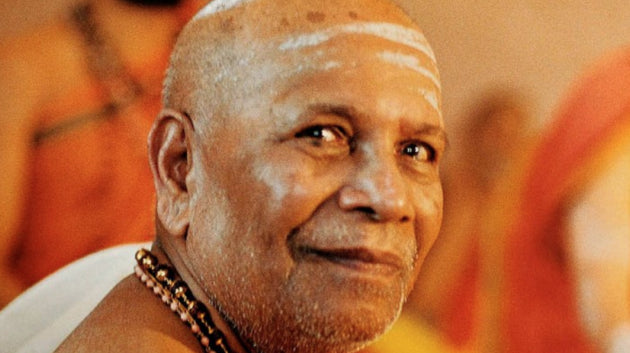
Swami Sivananda Saraswati, a great yogi master at the origin of Sivananda Yoga
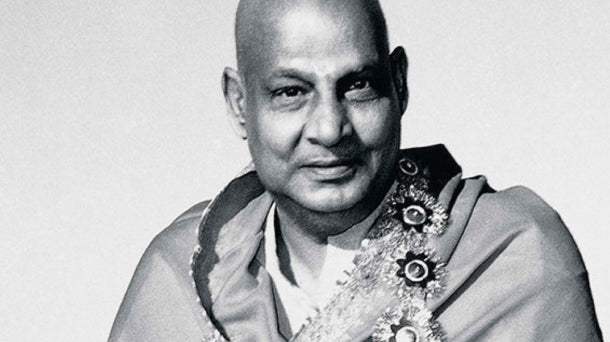
The master yogi Sivananda , guru of the creator of Yoga Sivananda .
Swami Sivananda Saraswati was born in Pattamadai, India, on September 8, 1887. He was born, under the name of Kuppuswami, in a family of orthodox Brahmins. 76 years later, he died on July 14, 1963 in Rishikesh. This Hindu man is known, in the history of yoga , for having been a doctor, but also for his great wisdom and his devotion to others, notably through his teaching of the yoga of synthesis or Integral Yoga . Wishing to spread the practice of this art to the greatest number, he sent his disciples to the 4 corners of the world and wrote various books in English. It was then that he trained Swami Vishnudevananda who created Sivananda Yoga .
Sivananda was first a doctor
During his childhood, Shivananda was already attracted to spirituality and felt compelled to help others. Later, he moved to Malaysia where he discovered many workers living in poverty. It was at this time that he became a doctor, also running a hospital. He cured the poor inhabitants for free and even more, because he gave them money to make up for the loss of their income.
Then, the yogi master Shivananda practiced and taught yoga in India
It was through studying the teachings of Vedanta that the yoga master discovered the true purpose of life. He wanted to follow the path of the wise and help others physically and mentally. In fact, he himself said: "Any type of work that serves to heal and relieve human suffering fills me with great joy."
It was then that in 1923, Sivananda left everything to become a monk traveling in the Himalayas, without money and devoting himself to the practice of yoga and meditation. It was there that he met his guru Swami Vishvananda who taught him the art of yoga. Thus, he took the name Swami Sivanada Saraswati .
In 1932, the spiritual master founded the Sivananda Ashram in Shivanandanagar, on the banks of the Ganges. 4 years later, he created the Divine Life Society in Rishikesh, training students in Integral Yoga . This yoga teacher taught the yoga of synthesis, mixing various types of practice and being at the origin of modern yoga in the West. Finally, in 1948, he inaugurated the Yoga Vedanta Forest Academy, the objective of which was to share the practice of yoga and the philosophy of the Vedas. Its slogan was "Serve, love, give, purify yourself, meditate and realize yourself".
Swami Sivananda is the author of many books on yoga
To spread spiritual knowledge throughout the world, yoga teacher Sivananda wrote several books in English, that is, no less than 200 works, especially on the practice of yoga. It was also a way to help people in a lasting way. For Swami Sivananda , writings were important because speech could be forgotten while printed words remained.
The spread of yoga throughout the world through its disciples
In Rishikesh, the yoga master had many disciples who collaborated in spreading yoga in the West, such as Swami Satchitananda who, at the request of Sivananda, left India to teach Integral Yoga throughout the world. During the year 1957, he told his student Swami Vishnudevananda: "Go to the West. People are waiting for you." The latter therefore went to the United States and then to Europe to spread the teaching of yoga.
The Creation of Sivananda Yoga
It was Swami Vishnudevananda, a disciple of Shivananda , who created Sivananda in the 1960s. This art is practiced according to the following principles:
- Asanas performed gently,
- Breathing exercises (Pranayama),
- Relaxation of body and mind through letting go,
- Vegetarianism,
- Positive thoughts and meditation.
Nowadays, you can find 9 ashrams teaching Sivananda Yoga . Discover all our yoga mats on the Tayronalife store.
Portrait of Nadège Cossu
Nadège began a reconversion in well-being by becoming a Yoga teacher, initial training followed with YogaWorks with Céline Antoine.
Then various training courses to perfect my teaching, TYE with RYE (Yoga for children), Yoga therapy - Celine Miconnet FFGY, Yin Yoga with Cécile Roubaud, summer 2018, three weeks with Ajit and Selvi Sarkar in Pondicherry.
I pay attention to my diet and sleep. I turned to nature which fascinates me and I am grateful for life.
How did you take care of yourself?
First I had to realize that what I was doing professionally was not doing me good even if it was very interesting. (+20 years in international companies).
This was taking me further and further away from my family, my life and my spirituality which had been very present since my childhood. To get out of it, I started by following a Reiki training in 2011 (a practice which had entered my life at the age of 18 with Buddhism)
I then decided to close one page of my life and open another.
I then turned to Buddhist meditation with the teachings of Phakyab Rinpoche and then meditation opened me up to Yoga (I also had to take care of my body which had been greatly affected by all these years of great stress).
I love more than anything transmission and sharing, which nourish me. I also intend to organize retreats next fall to spend more time with people.
What practice for your well-being?
I try to practice meditation regularly 45 mins/day and then I can follow up with a Hathaflow - Vinyasa type yoga practice.
What is the ritual of your practice?
Being introspective during my practices, connected to my breath, my body, my feelings and my Energy.
At the end of my sessions I practice a posture that is difficult for me, in such a way that the difficulty becomes a little less with each practice... or not!
What do you get out of it?
Great satisfaction, great serenity, a feeling of fullness
What do you carry in your yoga bag?
Mainly my mind 😊, as well as my EKO super lite Manduka travel mat (Very light and really practical and very good quality) and a notebook to take notes and write down what inspires me.
What is your favorite object/accessory?
My Labradorite and Tiger's Eye mala that I rarely take off
What would be your advice for Tayrona Yoginis?
Be happy and smile, respect your body and your state of the day
Persevere in your practice without necessarily expecting results according to Patanjali's yoga sutra
Abhyasa & Vairagya I.12
"The faculty of directing [Psychic activities] [is obtained] through both persevering practice and detachment."
Be engaged in right effort, Abhyasa (Persevering practice) without being attached to the results, Vairagya (Detachment)
Where/how do you practice?
I have a small yoga studio at home where I practice regularly, I practice outside if the weather permits, anywhere really!
Alone, but if I can take family members or friends with me, I won't hesitate!
I like to transmit and share
What is your mantra/favourite phrase?
The Medicine Buddha Mantra is one of my favorites.
"Teyata Om Bekanze Bekanze Maha Bekanze Bekanze Radza Samut Gate Soha"
I invoke the healing Buddha within me, going to the summit to eliminate the pain of illness and spiritual ignorance.
What postures can be performed with a yoga bolster?
The yoga bolster, your ally for a gentle practice.
The yoga bolster is a perfect support to perform certain asanas more easily, without injuries and to take full advantage of the benefits. This yoga accessory helps you with opening, relaxation, recovery postures, but also to stretch without forcing and boost your vital energy. But, you don't know which asanas to perform with your yoga bolster ? Well, in this article, we guide you and give you some examples of exercises with a yoga bolster .
Opening pose with yoga bolster
The most well-known yoga bolster exercise is the Supta Baddha Konasana, which consists of placing your yoga accessory under your back and your head along your spine. To perform this posture, sit at the front of the yoga bolster with the soles of your feet against each other and then lie down gently. As for your arms, place them on each side of your body. Your breathing is slow. This yoga bolster asana promotes the opening of your abdomen and your rib cage as well as working on the flexibility of your back and improving digestion. From an energetic point of view, this bolster posture allows the opening of the 3rd (solar plexus - Manipura) and 4th (heart - Anahata) chakra.
Relax and stretch with your yoga bolster
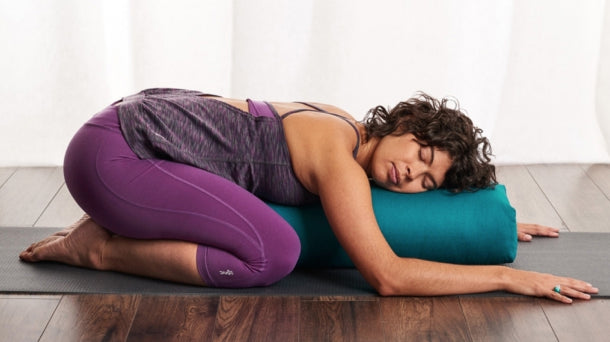
The yoga bolster is the ideal accessory to stretch without risk of injury. First, the Adho Mukha Virasana posture (child's pose) allows you to relax. Get on your knees, making sure to spread them while joining your toes and your buttocks are on your heels. Wedge the yoga bolster between your legs and lie on your stomach, stretching your spine. Finally, place your arms forward.
Another stretch with bolster is the asana Paschimottanasana to stretch your legs. Sit on a yoga mat and stretch your legs. Place your yoga accessory along your lower limbs. Finally lie down on the cushion, arms on each side.
You all know the Savasana posture (corpse pose)? Here, you just have to place your bolster in the hollow of your legs to stretch your pelvis or under your neck to stretch your neck and upper back.
Yoga Bolster Exercise to Gain Energy
The asana Setu Bandha Sarvangasana with raised feet has the virtue of boosting your energy. To do this, place yourself on the front of the bolster , with your legs bent. Then, roll your shoulders back to place your back on your yoga accessory . Then, push on your feet and slide back until you can lower your shoulders and head onto your yoga mat, chin towards your rib cage. We advise you to strap your legs or feet, hip-width apart, in order to maintain good alignment.
Relieve heavy legs with yoga bolster postures
The Viparita Karani posture will improve venous return in your legs to relieve uncomfortable heaviness, but also relax your lower back. Here too you can use a bolster or even a yoga brick. Lie on your yoga mat, legs stretched upwards against a wall and place your yoga accessory under your pelvis.
Discover all our quality and eco-responsible yoga bolsters on the Tayronalife store.
Portrait of Maud Bochaton, a teacher who listens to the heart.
Maud is a young yoga teacher who has chosen to help people find a balance in life, healthy and sustainable health, by teaching yoga and complementing it with aromatherapy advice. She is currently also training to be a naturopath.
She considers "the human being in his entirety" and devotes herself to helping and advising people to find their resources, their health, their well-being, to be aware of their true nature, in order to " live in Harmony" .
In her classes, Maud transmits a practice based on attitude, body alignment and action, which allows you to find letting go, positivity, a body in great shape, and be aware of your true nature. It is a practice to find flexibility, balance, energy, calming the mind and "listening to your heart"...
It was only natural that we asked him a few personal questions about his yoga practice, which we are sharing with you today.
How did you get into taking care of yourself?
Sporty, passionate about nature, I have long walked the paths with my running shoes. Then one day, out of a need to refocus on my body and mind, I pushed open the door of a yoga studio. In the week that followed I bought my mat and it has never left me. Practicing yoga has helped me to live in full awareness and to find a balance in life.
What practice for your well-being?
A dynamic practice, rather yang, which begins with a meditation, some asanas and a relaxation in savasana. For the need of balance, I like to practice yin yoga, to be in the present moment and find calm and appeasement.
What is the ritual of your practice?
I like to link my practice to a theme, to what drives me, what I need at the present moment...I start with meditation, sometimes mantras, pranayamas, then I enter into my asana practice and relaxation, accompanied by a playlist that makes sense to me...
What do you get out of it?
I find my balance, my stability, a serenity, even if sometimes things are often hectic. I learn every day to listen to myself…
What do you carry in your yoga bag?
It all depends on my practice but always with my Jade Harmony natural rubber mat which has been supporting me for some time now.
What is your favorite object/accessory?
My Amazonite bracelet, a joyful stone, it awakens the joy of living…
What would be your advice for Tayrona Yoginis?
The practice of yoga goes far beyond the practice of asanas, which is certainly beneficial for the body and mind. Yoga is our way of being and doing on a daily basis, so don't be afraid to awaken your true nature, to listen to what is inside you, to be who you are...
Where/how do you practice?
I practice in my living room, sometimes with my children hanging around me, outside in nature, in revitalizing places and I like to remain a student and practice with my first teachers...
What is your mantra/favourite phrase?
A sentence that means a lot to me:
“Make your life a dream and a dream a reality” - Antoine De Saint-Exupéry
To find Maud:
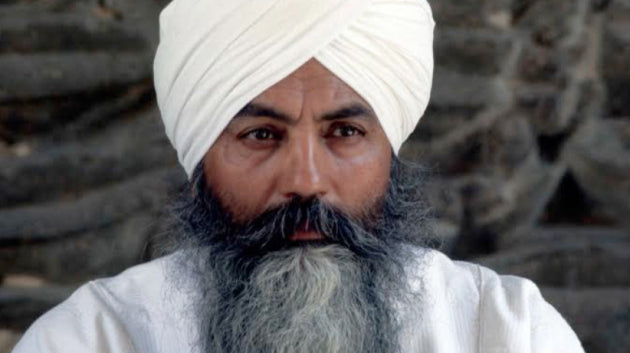
The story of visionary Yogi Bhajan, master of Kundalini Yoga
“Kundalini Yoga is a highway to awakening,” said Yogi Bhajan .
Yogi Bhajan , real name Harbhajan Singh Khalsa , was born on August 26, 1929 in Gujranwala, Punjab (Pakistan) and died on October 6, 2004 in New Mexico (United States), at the age of 75. After having been a knowledge long kept in India, the master yogi knew how to renew the technique of Kundalini Yoga to spread it in the world to bring more peace. He therefore taught and trained teachers in this art, notably by creating 3HO (Healthy Happy Holy Organization). Just like BKS Iyengar, this man marked the history of yoga , inspiring peace and benevolence.
Kundalini Yoga in India
Yogi Bhajan was a student of Sant Hazara Singh and by the age of 16 he was already a master in Kundalini . Traditionally, Kundalini Yoga was a practice protected and kept secret by the gurus that they only transmitted to a certain elite. But, that is without counting on the initiative of Harbhajan Singh . Around 1969, the latter worked as an Indian customs officer at the New Delhi airport, a senior civil service position. He regularly saw hippies from the West.
Kundalini Yoga Spread Begins in the United States
In the late 60s, Bhajan left his post as a customs officer to go to the United States to teach Kundalini Yoga to the general public and to as many people as possible, after centuries of secrecy. This, however, earned him the rejection of his peers. So he arrived in Los Angeles in 1969, during the ''hippie'' period, taking the name Yogi Bhajan .
First, he showed the Kundalini method to the students of the University of California, Los Angeles (UCLA). The yogi master's primary goal was to train future Yoga teachers in order to make the Kundalini Yoga exercises known as much as possible to lead people to live in peace.
Yogi Bhajan did not stop there! He also created organizations to transmit on a global scale. Thus, the master in kundalini sets up the 3HO (Healthy Happy Holy Organization) non-profit whose objective is to teach Kundalini and awakening to spirituality in order to harmonize the being physically, mentally and spiritually. During the year 1973, he also created SuperHealth which is none other than a detoxification program without drugs, but rather with the practice of Kundalini Yoga , meditation, massages, herbal cures, etc. He notably had as students hippies prey to drugs.
Finally, it is he who inspired the very famous infusions, I am talking about the Yogi Tea herbal teas. Indeed, during his classes, the yoga master served an aromatic drink based on spices to his disciples (Yogi Tea Classic).
A yoga that adapts to today's world
Yogi Bhajan did not just transmit Kundalini Yoga . He also adapted the practice of yoga to today's world, whose asanas are performed on a yoga mat . Indeed, it is rare with our schedules to have a moment to practice for 1 hour each day. A visionary at heart and understanding others and modern issues, he was able to propose another approach to this discipline. These are therefore Kundalini Yoga techniques that adapt perfectly to everyday life and the needs that he taught for many years. This allows you to feel the benefits more quickly.
Yogi Bhajan in the service of peace
The yoga master gave an important position to the heart and peace in his teaching. So much so that in 1985, he established the international day of prayer for world peace. But also, he was at the heart of inter-religious dialogue which allowed him to meet religious leaders of the world, being himself Sikh. Finally, he received the title of ''Siri Singh Sahib'' (Sikh religious and administrative leader) giving him the opportunity to be co-president of the world parliament of religions.
Want to learn more about Kundalini Yoga ? Check out the article Kundalini Yoga: An energetic harmonization of body and mind .
Pattabhi Jois: The Father of Ashtanga and Vinyasa
Sri Krishna Pattabhi Jois , the creator of Ashtanga and Vinyasa.
K. Pattabhi Jois was born on July 26, 1915 in Kowshika (Karnataka, India) and died on May 18, 2009 in Mysore, at the age of 93. He is particularly known for being at the origin of Ashtanga Yoga and Vinyasa, dynamic yoga styles. He taught this art for many years, particularly in his school Ashtanga Yoga Research Institute, after being initiated by Tirumalai Krishnamacharya, another great yoga master . It was in the 1960s that this discipline spread to the West and the United States, named Power Yoga. Nothing predestined him to be a yoga teacher. However, he has become a key figure in the history of yoga .
His discovery of yoga during his childhood
In Pattabhi Jois ' family, no one practiced yoga. It was in 1927, when the yogi master was 12 years old, that he listened to Tirumalai Krishnamacharya's lecture at the Jubilee Hall in the city of Hassan. The next day, Jois had to disciple him. For the next two years, the future Ashtanga teacher practiced yoga every day in Kowshika, with his master Krishnamacharya. The man hid it from his family, performing the asana sequences before going to study.
During the year 1930, K. Pattabhi Jois left home in Mysore to learn Sanskrit with just 2 rupees. At the same time, his teacher Krishnamacharya left Hassan to teach in another village. In 1932, the two men met in Mysore. Then, Jois regularly followed his guru during his demonstrations at the palace of the Maharaja of Mysore (Krishna Rajendra Wodeyar). His teacher stayed with his pupil in the city till 1941 before moving to Madras.
Pattabhi Jois teaches Ashtanga Yoga
Pattabhi Jois did not leave Mysore. In 1937, he married Savitramma (also called Amma). The same year, he started teaching yoga at the Maharaja's Sanskrit College and became a professor in 1956. However, in the year 1948, with the support of his students, he and his wife bought a house in Lakshmipuram (Mysore) where they lived with their children Manju, Ramesh and Saraswathi.
It was in this same place that the yoga master created the Ashtanga Yoga Research Institute after studying, among other things, the Yoga Sutras of Patanjali and the Upanishads. Jois left Sanskrit College in 1973 to teach only in his school. He had famous students such as Sting, Madonna and Gwyneth Paltrow and he continued to transmit the practice of Ashtanga Yoga in Mysore until his death in 2009 at the age of 93.
The spread of Ashtanga Yoga
It was in 1964 that a man named André Van Lysebeth stayed two months with the yoga master who taught him the postures of Ashtanga Yoga . Subsequently, the disciple wrote the book I Learn Yoga mentioning his teacher and his address. Students began to come from the West to learn yoga. In 1974, Jois made his first trip to the West, more precisely to South America to give a speech at a yoga conference. In 1975, he went to California, to Encinitas, for four months, beginning the diffusion of Ashtanga in the United States.
The Legacy of Pattabhi Jois
Ashtanga Yoga is now transmitted by R. Sharat Jois, grandson of the master yogi . He was his disciple for 20 years. In the West, this style of yoga, practiced on a yoga mat , continues to spread thanks to teachers. That's not all, in 1958, Pattabhi Jois also wrote a book, entitled Yoga Mala and published in 1962.
Want to know more about Ashtanga Yoga ? Check out the article Ashtanga Yoga: A Dynamic Traditional Yoga on the Tayronalife blog.