French Yoga Community
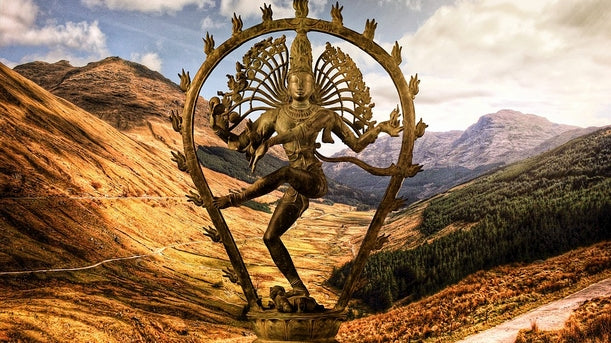
Shiva in yoga, the symbol of divine consciousness
Shiva , the greatest of the Hindu gods .
Shiva , a term meaning "the beneficent, the one who brings good luck". This name is not completely unknown to you and for good reason this god of India is one of the most famous. Husband of Parvati and father of Ganesh, he symbolizes both creation and destruction. He is also the king of dance, which is why he is represented in the form of Naṭarāja . However, in some representations, he appears with his Shakti (feminine pole), where he expresses masculine energy. Living on Mount Kailash, he is considered the god of yoga, inspiring several postures and the symbol of pure consciousness. This Hindu deity is the subject of many legends including one at the origin of the snake placed around his neck.
Shiva, a great deity of Hinduism
Shiva god , also named Civa or Siva, is the most revered god of Hindu mythology , especially in the religion of Shaivism (variant of Hinduism). However, his first name was Indra (king of the gods) at the time of Ancient India and Vedic legends. Living on Mount Kailash in the heart of the Himalayas, he is the deity of destruction for the creation of a new world (symbol of the cycles of life). He is also considered the king of dance and the god of yoga, protecting the earth from the goddess of the Ganges (the most famous river in India) called Ganga. Thus, this god in Hinduism calms the vigor of the waves by attenuating them in his hair.
Know that the god Shiva is part of the 3 divinities of the Trimurti just like Vishnu (energy of preservation) and Brahma (creative energy).
He is the father of the famous god Ganesh , symbolizing wisdom and prosperity. His wife is none other than the goddess Parvati (name meaning "woman of the mountain"), reincarnation of Sati and sister of Vishnu. Also called Shakti, she represents the supreme feminine principle. Shiva being the masculine principle. Nandi his faithful mount, representing a bull, is also the subject of a legend.
How is Shiva represented in Hinduism?
There are many representations of the god Shiva : an ascetic, a mendicant, a yogi, with Shakti (feminine power) creating a hermaphrodite creature ( Ardhanari ), a lingam or meditating. But, his best known form is Naṭarāja , the lord of the dance or cosmic dancer, who marks the destruction and creation of the world (rebirth), symbol of the eternal. In this case, this god of Hindu legend has 4 arms and is generally found in a circle of flames.
The incredible legends of the Hindu god Shiva
A fantastic legend accompanies the representation of the deity Shiva . Sati, daughter of Daksha (god of sacrifice in Hindu mythology ) had the desire to marry Shiva . However, her father was not of this opinion, but he ended up accepting the union. However, Daksha did not invite the god of destruction to the sacrifice ( Yagna ) in honor of Vishnu. It was then that Sati plunged into the sacrificial fire, hurt by the insults uttered by her father on her husband. Shiva wanted revenge. The Hindu god joined the place of the ritual, took the corpse of his beloved on his shoulders and then did a dance of death ( Tandava ). This god of India attacked the divinities present and cut off Daksha's head to throw it into the fire. He threatened to destroy the world. It was then that Vishnu (the one who preserves the universe) arrived to appease Shiva . The latter, not finding Daksha's head, replaced it with a goat's head. Thus, Sati's father recognized in him a great Hindu divinity and became his servant. Finally, the god Shiva meditated until his wife's reincarnation as Parvati.
Another legend tells that Shiva and Vishnu went to a forest to do battle with heretics. Angry, their opponents sent a tiger, a snake and a dwarf to retaliate. The Hindu god killed the tiger. That is why he is depicted sitting on the feline's skin. The deity Shiva tamed the snake and placed it around his neck. Finally, he put his foot on the dwarf and began a powerful dance. Then, the people recognized Shiva as their god.
The Meaning of Shiva in Yoga
Shiva is the god of yoga, which is why he is represented in the form of a yogi with universal knowledge. Some would say that the practice of yoga seeks the union between Shiva (consciousness) and Shakti (energy). Moreover, 84,000 asanas come from his movements, including the dancer's posture, also called Shiva's posture ( Shivâsana or Shiva-âsana ).
The Hindu god in yoga is the origin of all mantras. You can invoke Shiva during your meditations while sitting quietly on your yoga mat or on a meditation cushion , thanks to a specific mantra: Om Namah Shivaya . This means "Worship of Shiva" or "to meditate in Lord Shiva".
- Om symbolizing the divine vibration of the universe,
- Namah or Namaha meaning respect, homage or adoration,
- Shivaya or Shiva showing absolute reality, pure Consciousness.
Discover all our quality, eco-friendly yoga straps to practice the dancer's posture with peace of mind.
The Power of Minerals and Meditation
Sleep better with stones | Lithotherapy
How to choose your yoga class?
Choose a yoga class after trying several.
It's back to school and you want to take advantage of it to sign up for a yoga class . But, several possibilities are available to you. Between group or private classes, beginner or not, Ashtanga, Vinyasa Yoga, Bikram, etc. you are completely lost and you don't know what to choose. Don't panic, we are here to guide you. In this article, the beginner yogi will discover how to choose his yoga class for a session that suits him. You simply have to select a goal, a type of class, a style of yoga, a level, a teacher and a schedule. Easy right?
Determine your goal to find the perfect yoga class
Before choosing a yoga class , it is important to think about your goal, by asking yourself the following question: "Why do I want to practice yoga?". To tone your body, gain flexibility, de-stress, improve your sleep, have better self-confidence, be more easily in the present moment. Whatever the reasons, they are legitimate.
Private or group yoga class?
There are two types of classes: individual or group yoga sessions .
Individual yoga class
In a private yoga class , the session adapts to your physical condition, your morphology, your goal and your schedule. However, these classes are more expensive.
Group yoga classes
The group yoga class encourages meetings between yogis who share the same passion. In addition, the yoga studio can lend you equipment for the duration of the session and therefore you do not need to spend money to equip yourself. However, the postures do not necessarily adapt to all practitioners.
What type of yoga to choose?
Choosing your type of yoga depends on your goal. If you are looking for relaxation, choose a gentle yoga (like Nidra and Yin Yoga). But, if on the contrary, you want to tone your body, opt for a more dynamic yoga (like Vinyasa, Bikram, Ashtanga and Power Yoga).
Focus your attention on the level of the yoga session
A group yoga class corresponds to a level. If you are a beginner, choose a beginner yoga class where the postures are easier to perform. Conversely, if you are more experienced, choose a more advanced group yoga session , because you will be less bored.
Choosing a yoga teacher is just as important
It is essential to select a yoga class with a qualified teacher, that is to say, one who has received training. But also, with whom you will have a good feeling in order to progress more easily and practice in good conditions. The teacher must also be attentive to his students by correcting them if necessary and respecting their opinions, their lifestyle and their religion. For this, nothing better than testing the yoga class .
Select a yoga class according to schedule and price
Yes, yoga sessions are paid. The price depends on the class (group or not), the type of yoga, the reputation of the teacher and the city. Do not hesitate to compare the different offers to find the one that fits your budget. As for the schedules, they are more flexible in the case of individual yoga classes . However, the studios offer various schedules, during the day and in the evening.
Buy your first eco-friendly yoga mat from the Tayronalife online store.
Portrait of Eva Lastra, psychoanalyst and yoga teacher
Let me introduce myself, Eva Lastra, psychoanalyst and yoga teacher under the name YogaByEva.
I created an idea, a concept to weave or re-weave a bond of complicity between the parent and their child!
So I naturally organize Parent-Child workshops all year round and in the form of summer activities, outdoors at remarkable sites in Périgord!
How did you get into taking care of yourself?
It was during my last pregnancy that I wanted to reclaim my body while sharing it! The idea was weird but my husband helped me a lot!
He thought I was beautiful even with 25 extra kilos hahaha!
Taking care of myself today means listening to myself!
What practice for your well-being?
ENJOY !
I take advantage of the ray of sunshine to go for a walk, I take advantage of laughing and bursting out laughing with my children, I take advantage of the herbal tea-blanket-DVD-sofa moment with my husband, .... I take advantage of feeling "in my place"!
What is the ritual of your practice?
A candle, music (I love background music), and above all a few drops of orange blossom placed inside the handles (my Proust madeleine)!
What do you get out of it?
An avalanche of well-being, serenity and calm, even peace!
What do you carry in your yoga bag?
A strap (for flexibility), a blindfold with lavender seeds (for relaxation) and of course my mat 😉
What is your favorite object/accessory?
A small amethyst found by my dad a long time ago, which I carry everywhere!
What would be your advice for Tayrona Yoginis?
Listen to yourself... The body is not a machine, it is rather to be tamed or re-tamed, we should even learn or relearn to feel, to sense!
The body is the most amazing tool we have!
Where/how do you practice?
In the morning, when I get up, at home, a bit of meditation, a gentle warm-up with a Bhramari Pranayama, a Vinyasa Yoga practice followed by relaxation. This moment is essential to start my day in a good state of mind. In the evening, when I have time, on my terrace even if it's cool, a rather Yin Yoga session while paying attention to my sensations.
What is your mantra/favourite phrase ?
Top 5 Poses for Heart Opening
Opening the Heart Chakra with Yoga: Poses to Release Your Energy
Learn how to practice yoga poses to open the heart chakra, known as Anahata in Sanskrit. Opening this energy center can promote the smooth flow of life energy, improve the functioning of associated organs, strengthen compassion, increase self-confidence, and promote forgiveness. Explore yoga poses like Warrior 1, Wheel, Fish, Cobra, and Reverse Salutation to cleanse and activate this essential chakra for your well-being. Then, continue your journey by practicing pelvic-opening poses for a holistic experience.
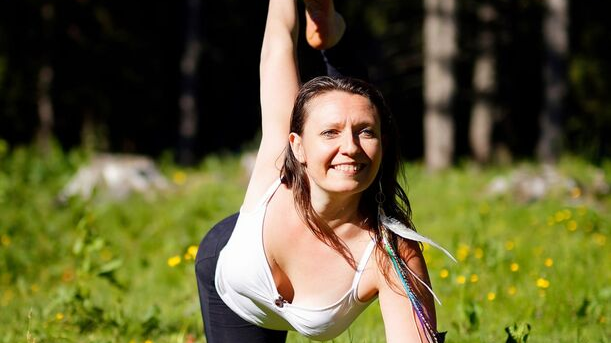
Portrait of a Yogi: Amélie Bruder
Yoga session to boost your energy
Practice energy yoga every morning to boost your vitality.
In the morning, you already feel tired. Even worse, during the day, you feel sleepy and therefore lack concentration and motivation. In this situation, it is difficult to carry out your activities. The solution? Practice yoga every morning. But, you don't have time? Know that only a few minutes are enough, especially 15 minutes. For this, we have created for you a yoga class to gain energy . No more day that starts in a bad mood! This session will energize your body and mind and wake them up gently.
Breathing exercises to boost your energy
In yoga, breathing exercises (Pranayama) have a very important place. For morning yoga , it is even more so! Indeed, breathing allows you to oxygenate your body and therefore increase your vitality.
- Sit in the lotus position (or cross-legged) with your back straight. For added comfort, use a meditation cushion or yoga block ,
- Your hands are placed on each of your knees in chin mudra,
- Close your eyes,
- Breathe in slowly and deeply,
- Exhale equally through the nose,
- Repeat the same thing, but when you exhale, slowly pronounce the mantra "Om",
- Repeat this step 3 times in a row. During this exercise, become aware of your body and the present moment.
Yoga Poses for Energy
Asana for Energy: Tree Pose (Vrikshasana)
The tree symbolizes our energy and our anchoring. When the latter is stable, you feel well-being. To perform the tree pose , stand on your mat, back straight and shoulders down. Place your left leg on the inside of your right thigh. Finally, bring your hands together palm to palm at heart level. We advise you to fix a point in front of you to find your balance. Stretch your arms above you, when you are more stable. After 5 breaths, repeat this pose to boost the energy on the other side.
Warrior Pose 2 (Virabhadrasana 2) to Increase Energy Through Yoga
Warrior 2 asana will boost your body's energy.
- Stand up with your legs spread,
- Pivot your right foot 90° and bend the same leg at a right angle,
- Keep knee and ankle aligned,
- Your other leg is straight,
- Then, turn your torso to the right, while keeping it straight,
- Raise your arms out to each side of your body parallel to the floor and in line with your bent leg. Palms facing up.
- After 5 breaths, switch sides.
Yoga Session for Energy: Stork Asana (Uttanasana)
To replicate the stork pose, stand while stretching upwards. As you exhale, raise your arms and bend your torso forward. Try to touch your feet. If you can't do this, use a yoga block to help you.
Downward Facing Dog (Adho Mukha Shvanasana), a Yoga Exercise for Energy
The downward dog asana helps circulate kundalini in the body .
- Get on all fours on your yoga mat (knees under your hips and hands under your shoulders),
- Raise your buttocks as high as possible while keeping your back straight,
- Then, straighten your legs,
- If you can do this, place your heels on the floor.
Morning Yoga Boost: Half-Split Pose (Janu-sirsasana)
The half-plier asana helps to clear your mind and free it from negative thoughts that drain your energy. To do this, sit on your mat with your legs straight in front of you, but slightly bent. Your back is straight. Bend your right knee and place your foot against your left thigh. Inhale while lengthening your spine. Then, as you exhale, gently lean forward (towards your left leg) while keeping your back straight. After a few breaths, do this posture to gain energy on the other side.
Meditation in Savasana posture
All yoga classes for energy end with a moment of relaxation, generally in the Savasana position which consists of lying on the mat and concentrating on your breathing.
When you are lacking vitality, it can be interesting to balance your 7 energy centers through Kundalini Yoga .
Portrait of a passionate Yogini; Mélanie from Yogamove
Mélanie, a nature and animal lover, sporty at heart, is a young yoga teacher in Annecy & Aix-les-Bains. The classes taught by Mélanie are a complete and energetic approach to yoga (trained in Vinyasa Yoga and Satiam™ Yoga). Vinyasa Yoga is a fluid form built on the flow of movements and breathing and forms a sequence of varied asanas to strengthen the body and mind. Vinyasa means "connection of movement and breath". Satiam Yoga™ is a return to the essence, it is the yoga of lovers of life: a yoga combining postural alignment, breathing and opening of the heart. It is a yoga based on alignment, attitude and action
It was only natural that I asked him a few personal questions about his yoga practice, which I am sharing with you today .
How did you get into taking care of yourself?
I have always felt the need to be as in tune as possible with myself and with the world around us. When I discovered yoga, from the first sessions, I very quickly felt the connection with this practice and the good that it brought me, beyond the practice on the mat, its impact in everyday life.
A rider since I was very young, and passionate about sport, I am always amazed by the connection and the link that Yoga can have with different sporting practices.
The desire to share and transmit this passion was obvious. That's when I decided to train. I was really touched by this approach to life, this awareness of my body and my breath. Return to the very essence of life. I was really touched by this approach to life, this awareness of my body and my breath. Return to the very essence of life.
Today I am lucky to be able to teach this beautiful practice based on alignment and listening to one's body, all in full awareness. Sharing my passion is a real joy for me, especially the exchanges that it generates.
What practice for your well-being?
Above all, I try to practice according to the present moment, how I feel at the time. I then adapt the session to what I feel the need for.
What is the ritual of your practice?
As soon as I wake up I love taking the time to look outside, see the weather, take the energy of the day. Otherwise, my practice begins with a meditation, sometimes followed by some pranayamas, then asanas in the form of dynamic flows often on music depending on the theme and my energy of the moment. I prefer to practice in the morning, it allows me to wake up my body, stretch it and feel ready to face the day. Then in the evening before going to bed, I enjoy doing postures that allow me to stretch gently and relax to prepare for sleep.
What do you get out of it?
Well-being. When I can't practice, I feel the difference. Yoga allows me to keep my balance, to listen to myself.
What do you carry in your yoga bag?
I always take with me my water bottle, a sweater for before and after the session and of course my Liforme Yoga mat or Prolite Manduka from Tayrona Yoga!
What is your favorite object/accessory?
My little bracelets given to me by my loved ones. They follow me everywhere!
What would be your advice for Tayrona Yoginis?
I would like to tell them to enjoy life and do what they love! Practicing yoga is for me a philosophy of life, a daily practice of being and making "Yoga live"!
Where/how do you practice?
I practice everywhere, whenever I can, but it is true that some places are more conducive than others to practice and where I feel perfectly in tune, like the house where I grew up in the countryside or surrounded by my animals are for me moments where I am fully connected. Otherwise I practice most of the time in studios or at home.
What is your mantra/favourite phrase?
I don't really have a favorite phrase, but I like to think that you have to enjoy life, not wait for it to pass and be yourself.
Saccidananda Murtaye
Nisprapancaya Shantaya
Niralambaya Tejase
Om »
Facebook: https://www.facebook.com/yogamove.melanie/
Instagram: https://www.instagram.com/yogamove.melanie/
Website: http://yogamove.fr/
The symbol of Ganesh in yoga
A famous Hindu deity , Ganesh occupies an important place in yoga . Like his representation, this elephant-headed god is the symbol of wisdom and prosperity . He brings protection to those who invoke him in the beginning of all things. He is a great ally who brings good luck . Venerated in India, he is nonetheless known in the West. He is widely represented in the practice of Yoga , whether meditation or postures . Let's trace his history and symbolism in yoga.
The legend of Ganesh
There are several versions explaining the birth of Ganesh and especially regarding his elephant head. He is the worthy son of Shiva and Parvati. According to legends, he is sometimes considered a pure creation of Parvati (wife of Shiva). However, in some Puranas, it was Shiva who created Ganesh at the request of the Gods to protect them from their enemies.
The most famous legend tells that Parvati conceived Ganesh in the absence of Shiva who had gone to meditate in the Himalayas. Ganesh was created by Parvati using dust, ointments, oil and water from the Ganges so that she would feel less alone in the absence of her husband. She made Ganesh her guardian, to ensure her protection. When Shiva returned, he found Ganesh blocking his path, guarding Parvati's door as she was taking a bath. Shiva, furious at being denied access to his home, cut off Ganesh's head. Dying of grief, Parvati demanded that her husband give her back her life. Shiva, who had not recognized their son and anxious to make up for his clumsiness, promised to replace Ganesh's head with that of the first living being he would find. In his quest, the God Shiva met a baby elephant, he adorned Ganesh's body with its head to bring him back to life. After this, Shiva recognized Ganesh as his own son and appointed him as the chief of all his servants.
Symbolism and meaning in yoga
The story of Ganesh represents the dual birth process that every individual is brought to pass through. First, there is the birth of the body on Earth, then comes the birth of the spirit through the awakening of consciousness. This is what Yoga teaches us: the harmony of body and mind.
Ganesh is represented by the first chakra at the base of the spine. Hence its importance in the practice of Kundalini yoga , he is the Master of Kundalini and the subtle channels. This practice is the energetic harmonization of the body and mind, it allows the release of the vital energy that lies dormant in each of us. This work is based on the 7 chakras, it will be facilitated and more effective by using the appropriate yoga equipment .
The Hindu God Ganesh also finds his full significance in other forms of yoga, as he is the one who brings protection in the beginning of all undertakings or in preparing for a journey. He is the one who removes obstacles or sets them up if he deems them necessary.
Invoking Ganesh: Mantra-Yoga
Meditation is one of the keys to awakening the mind, it can be done comfortably on a yoga mat or in the great outdoors. It allows the mind to rise and become aware of what surrounds it. Mantra is a song that helps to meditate. It is used to bring vibrations through sound into the astral body. These vibrations help to harmonize our energy centers and especially our chakras .
This is why reciting a mantra acts on concentration and helps to manage stress. It is good to invoke the mantras of Ganesh in yoga, because it defends values of perseverance, it teaches us how to overcome the obstacles encountered on the path of our life. The mantras of Ganesh protect from evil and bring success. The Om Gam Ganapataye Namah is a very good example:
- Om = The sound of the universe
- Gam = This is the sound of Ganesh's power. It represents his "seed syllable" or bija mantra
- Ganapataye = This is another name given to Ganesh which means: the breaker of obstacles
- Namaha = I bow
Ganesh is a benevolent god to take as an example, he invites introspection and discernment when we encounter difficulties. He teaches us that we must learn from our failures in order to progress. If, like Ganesh, you want to overcome obstacles, yoga is the discipline that will help you find this balance. To fully enjoy your sessions, equip yourself with a good yoga mat as well as comfortable equipment specially designed for the practice of this discipline.
How to choose a yoga retreat?
A yoga retreat is an opportunity to take some time for yourself.
Have you finally managed to take a vacation or book a weekend for yourself? For a few months now, you have been dreaming of going on a yoga retreat ? The only downside is that you don't know where to stop your choice as the various yoga stays inspire you. Between intensive courses, yoga vacations , discovering a country, you don't know what to choose. Sometimes, you just have to listen to your intuition, but in some cases your little inner voice doesn't suggest anything to you and you may feel lost. Thanks to our advice, you will finally choose the trip that suits you.
The duration of the yoga course depending on your free time
Do you have a week of vacation or just a weekend free in your schedule? Obviously, choose your yoga retreat according to the length of your vacation or your needs.
The perfect place for your yoga retreat
The choice of the location of your yoga vacation is made according to your preferences. Sea, countryside, forest, mountain, desert, jungle, tropics… what is the landscape that inspires you the most? Others will be rather attracted by a more original destination to break away from everyday life like Nepal, Mongolia, Japan, Peru, New Zealand, Bali or even India, where yoga originated. Our advice, find out about the environment and climate of a foreign country before booking your yoga stay . Note that there are also retreats in France, particularly in Brittany and in the Landes ( Audine farm of Yoga Searcher in Bénesse-Maremne).
Choosing the right type of yoga according to your preference
Each yoga journey has its own style of yoga. Bikram, Ashtanga, Iyengar, Power Yoga… some types are dynamic while others are softer and more relaxing. It's up to you to choose your practice. Do you want to improve in your field or discover a new style? Be careful, also check the level of the classes offered: all levels, beginner, intermediate, advanced. Indeed, if you are experienced and you find yourself in beginner classes, you will be bored. Conversely, if you are a novice during an advanced session, you will be lost.
The program that suits you during your yoga trip
The program changes from one yoga retreat to another. So many choices between mountain themes, countryside (with digital detox or treatments for example) or adventure (with outdoor activities), intensive or more relaxed courses, extra activities or even the discovery of a country. Remember to look carefully at the services included. To choose the perfect yoga retreat , listen to your desires, your needs and your goals.
Choosing your yoga stay according to your budget
The price of the yoga course depends on the location, the number of days and the services included. If you have a limited budget, opt for a weekend. A little tip to save money, opt for a bed in a dormitory, which is cheaper. The single room requires the payment of a supplement.
Yoga Vacation Menu and Accommodation: Equally Essential Points
A yoga weekend is not just about yoga classes. You should also pay attention to the menus offered (usually vegetarian or vegan), accommodation, but also transportation. Be aware that some yoga trips do not provide accommodation, nor plane tickets and even less extras (visits for example). So, find out well before booking.
Discover the reasons to do a yoga retreat on the Tayronalife blog.
7 good reasons to use a yoga wheel
You can count on your quality Yoga Wheel to relax, practice openings, build muscle and gain balance.
You may know the yoga wheel as the Yoga Wheel ? It is indeed the same thing. Be careful not to confuse it with the wheel asana. This round yoga accessory will be one of your best allies to perfect your practice without risk, just like the bolster or the brick. But you don't see what it can be used for? Let yourself be convinced, thanks to this article, that using a yoga wheel can be truly beneficial for all yogis, even the most seasoned. We advise you to use it on a yoga mat in order to have optimal stability.
Inverted Yoga Wheel Poses: Opening the Rib Cage/Heart, Flexing the Back and Releasing Tension
Inverted postures all allow you to work on the flexibility of your back. Here, the solid Yoga Wheel is a great help, because it perfectly hugs your back curves, without the risk of injuring yourself during your back bends. You will force less! Now, you can imagine that the use of the yoga wheel does not stop there. It helps you with your heart/rib cage opening postures:
- Half-bridge asana (Ardha-setu-bandhâsana),
- Wheel Pose (Urdhva Dhanurasana).
With the constraints imposed by daily life (especially sitting in front of a computer), we tend to be tense, especially in the upper back (shoulders and neck). Among the virtues of the Yoga Wheel , you will find the possibility of relaxing your muscles by practicing shoulder opening. But how to do it?
- For a cork yoga wheel backbend, sit on a yoga mat,
- Your legs are bent and your feet are firmly anchored in the ground,
- Position the eco-friendly Yoga Wheel behind your back lengthwise,
- Place your arms above your head and then tilt your body backwards using your legs,
- Finally, put your hands behind your head or grab your eco-friendly yoga accessory .
The Yoga Wheel to massage your spine
During your inverted postures, you can simply massage your spine along its entire length, by rolling your eco-friendly yoga accessory on itself. Relaxation guaranteed!
Benefits of the yoga wheel: strengthening your body
As you know, practicing yoga also helps to strengthen your body. And the eco-friendly Yoga Wheel will help you! You can even work on a particular part: legs, abs, lower part of your anatomy or the top. For example, do push-ups by placing your yoga accessory under your feet.
The benefit of strengthening your abs is that you improve your balance and posture in general. Why? Simply because these muscles are the stabilizers of your body. Tighten your abs and you will see that your balance is better! In a plank position, place your yoga wheel under your feet and stay like that. Have fun lifting one leg, then the other. This also helps to work on your stability.
Yoga exercises with a wheel to develop your balance
As its name suggests, the quality yoga wheel rolls. It is therefore a good way to develop your balance, a key point in yoga, but also to stimulate your inner ear. For example, try standing on it on one foot. The other foot is bent along the body and the hand holds it. Be careful, at the beginning, hold on to a wall so as not to hurt yourself by falling.
Using a Yoga Wheel to Stretch Your Body
After your session of strength training and balance postures, perform stretching asanas with a yoga wheel . Stretch each part of your body, especially your legs. Here's how to do it:
- While standing, place one leg on the yoga prop ,
- Bend the other hind limb to an angle of about 90°,
- Your arms are extended upwards, palm to palm. This exercise will stretch the iliopsoas muscle.
Why this one? Well, when this one is too contracted, it is responsible for more or less unpleasant sciatic pain.